Read Time 6 mins
Furniture and lighting manufacturers broadly recognize that their sales operations need modernization. But for a growing share of companies, the real blocker is the timing trap created by ERP migration projects. These multi-month initiatives absorb technical bandwidth and create a "wait until we're done" logic that consistently pushes sales enablement to the back of the queue. The challenge is that post-migration, the same competing priorities reappear, and another market season passes without progress. This article examines why this pattern is so persistent, what it costs manufacturers in real terms, and why implementing sales enablement tools in parallel with an ERP migration is the smarter move.
The ERP Migration Era
Something has shifted in how manufacturers in the furniture and lighting industry talk about sales technology. A few years ago, the typical resistance sounded like: "We don't really need that" or "Our reps are fine with what they have." That skepticism has largely disappeared. The conversation today sounds more like: "We know we're behind. We're not even close to where we should be."
The relevance argument is over. What remains is a more practical problem: timing. Specifically, the kind of timing that gets blocked by the single most resource-intensive IT project in manufacturing — the ERP migration.
Sales teams are still processing orders by email. Field reps are carrying binders and printed catalogs to dealer meetings. Quoting involves manual spreadsheets and phone calls. The gap between current operations and what's possible with modern sales tools is wide — and for many manufacturers, the ERP migration is the reason it stays that way.
During an ERP migration, IT and operations teams have effectively no remaining capacity for parallel initiatives. Any project that touches data, pricing, or workflow gets placed in a holding pattern. Sales enablement lands squarely there.
"Right now, we're implementing our ERP system to the cloud. So we're in that process now for the next four months."
— CEO of a mid-sized lighting manufacturer explaining the delay in moving forward with digital sales tools, March 2025.
Four months is the optimistic estimate. ERP migrations regularly run longer, and the stabilization period that follows extends the freeze on other initiatives even further.
Why "Wait Until the ERP Is Done" Keeps Failing
The reasoning seems sound: finish the ERP, stabilize operations, then tackle sales enablement. One project at a time.
The problem is that this logic consistently fails in practice.
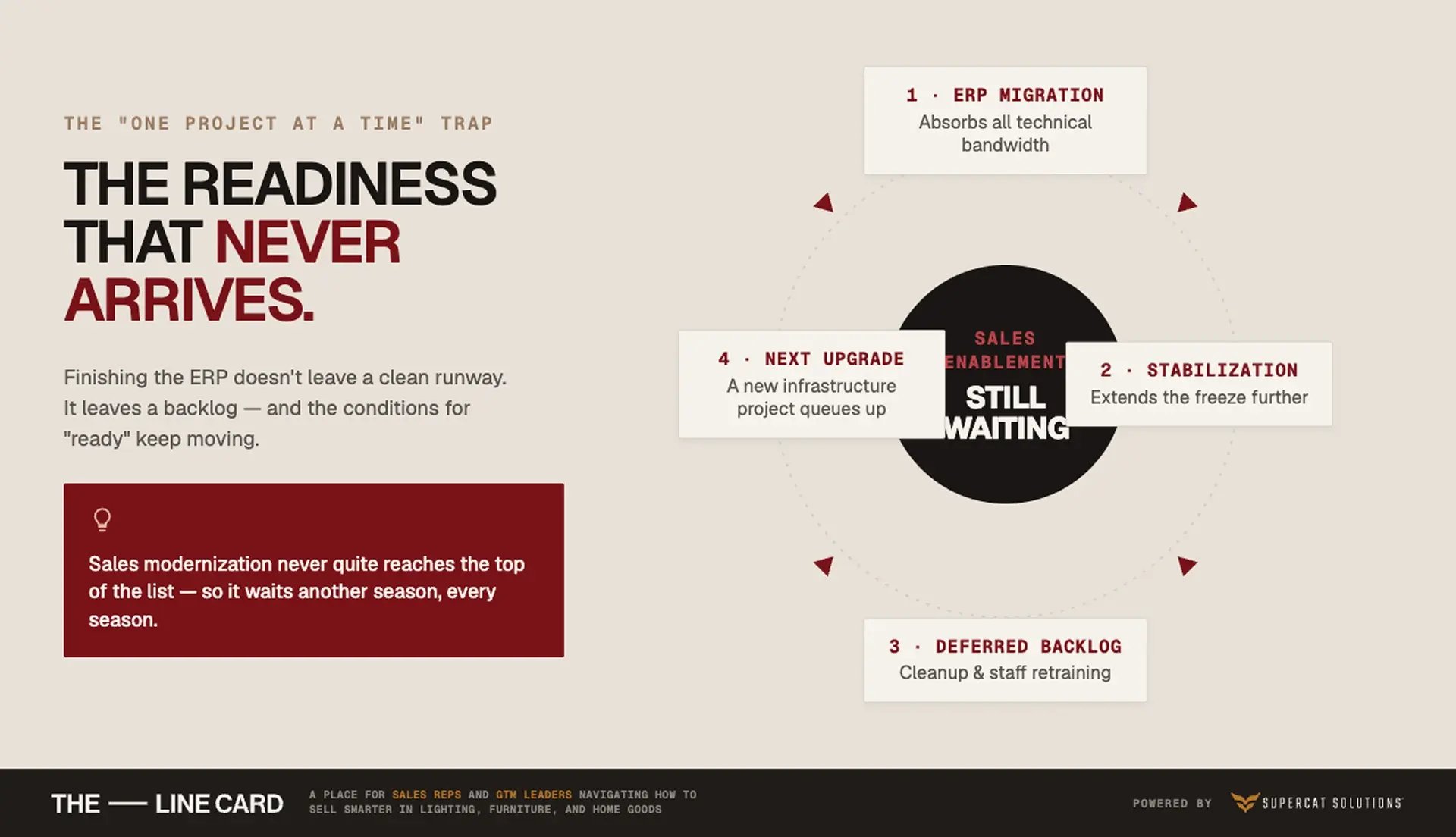
When an ERP migration concludes, it doesn't leave a clean runway for the next initiative. It leaves a backlog of deferred maintenance, data cleanup, and staff retraining. Sales enablement, which was already waiting, gets pushed again. After that, there's the next infrastructure upgrade. The conditions for readiness keep moving, and sales modernization never quite reaches the top of the list.
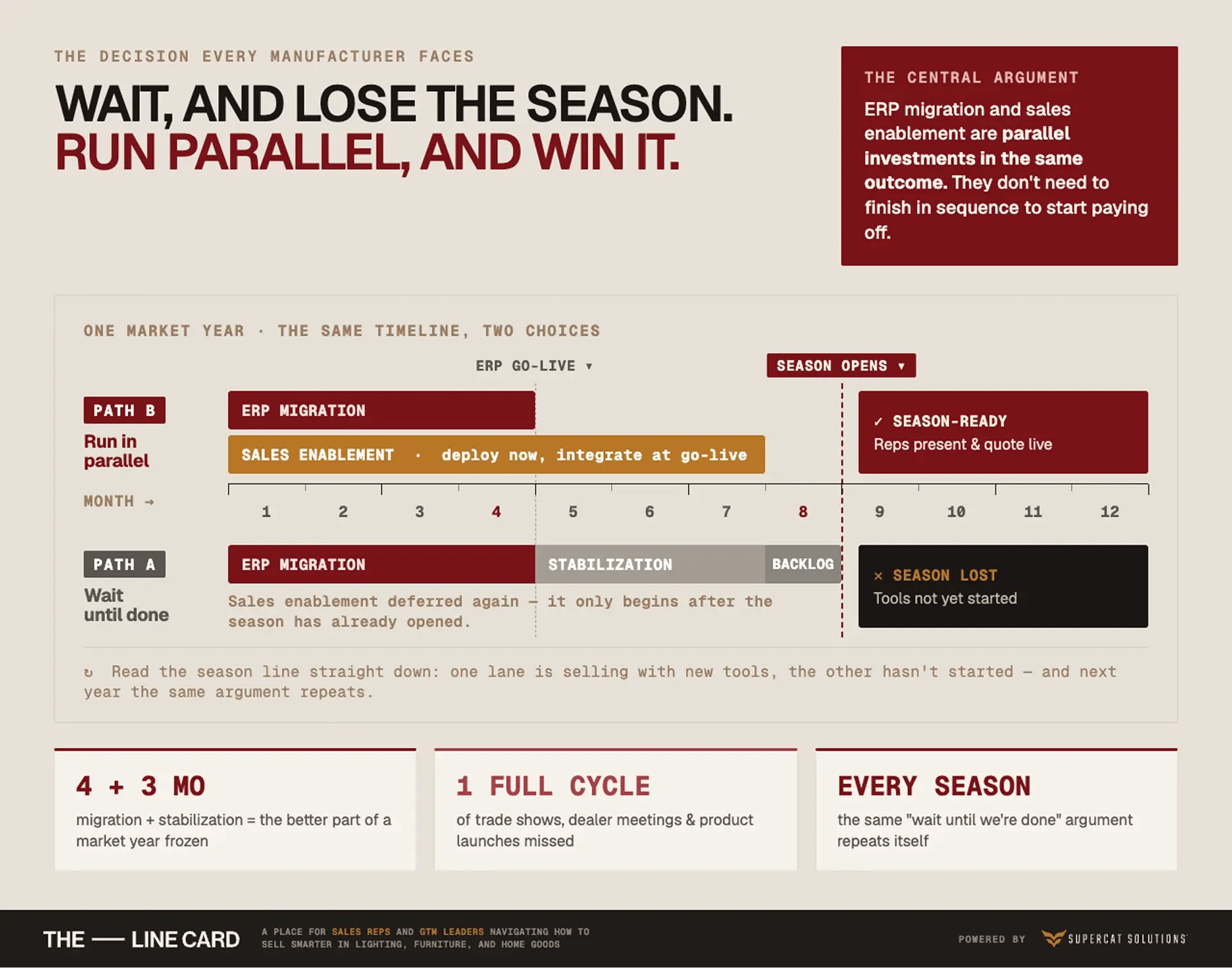
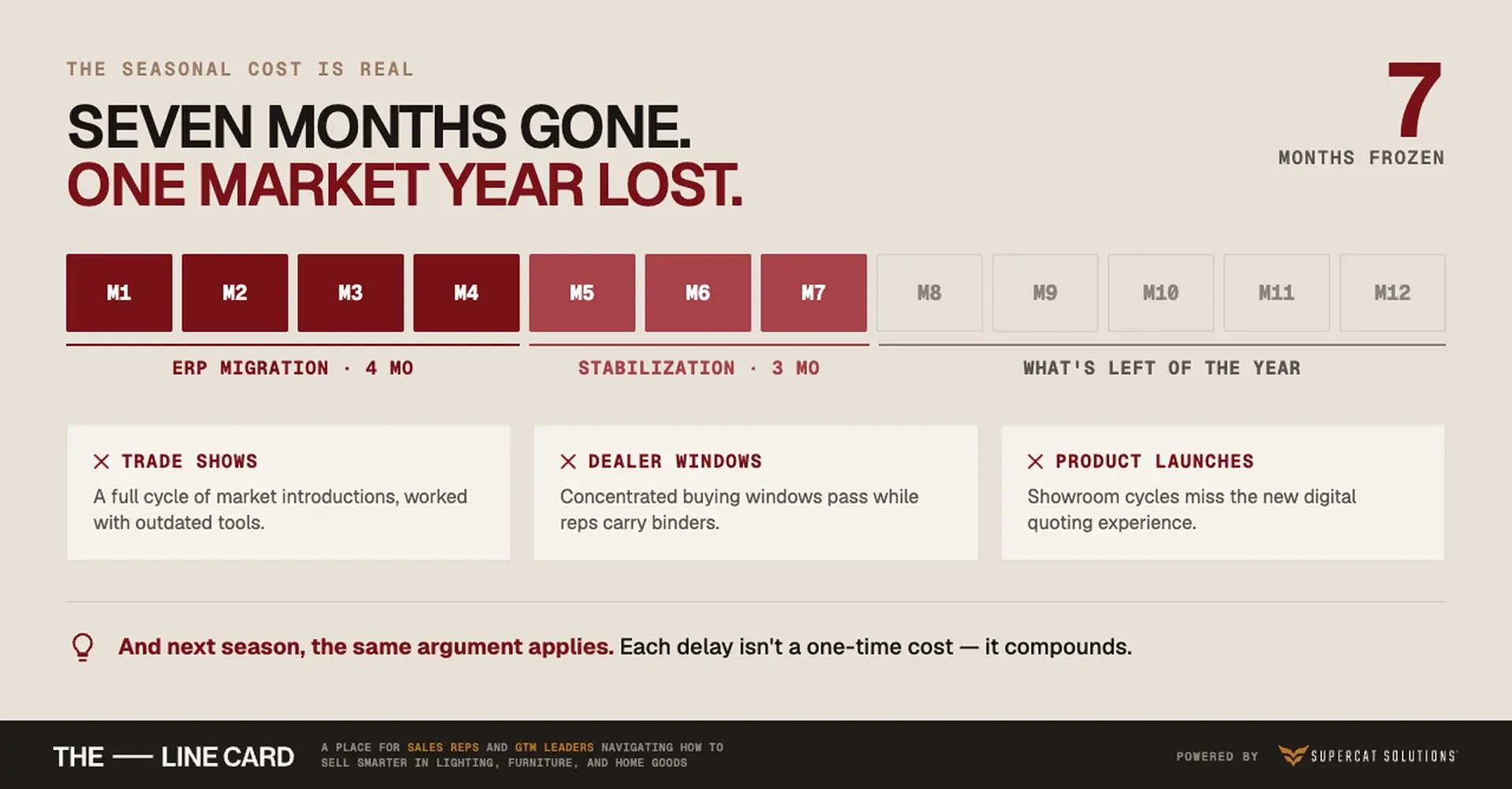
The seasonal cost is real. In the furniture and lighting industry, timing matters. Market introductions, showroom cycles, and dealer buying windows are concentrated. A manufacturer that delays digital sales tools through a four-month migration and a three-month stabilization period has lost the better part of a market year, a full cycle of trade shows, dealer meetings, and product launches where reps are still working with outdated tools. And next season, the same argument applies.
Run Sales Enablement During the ERP Migration
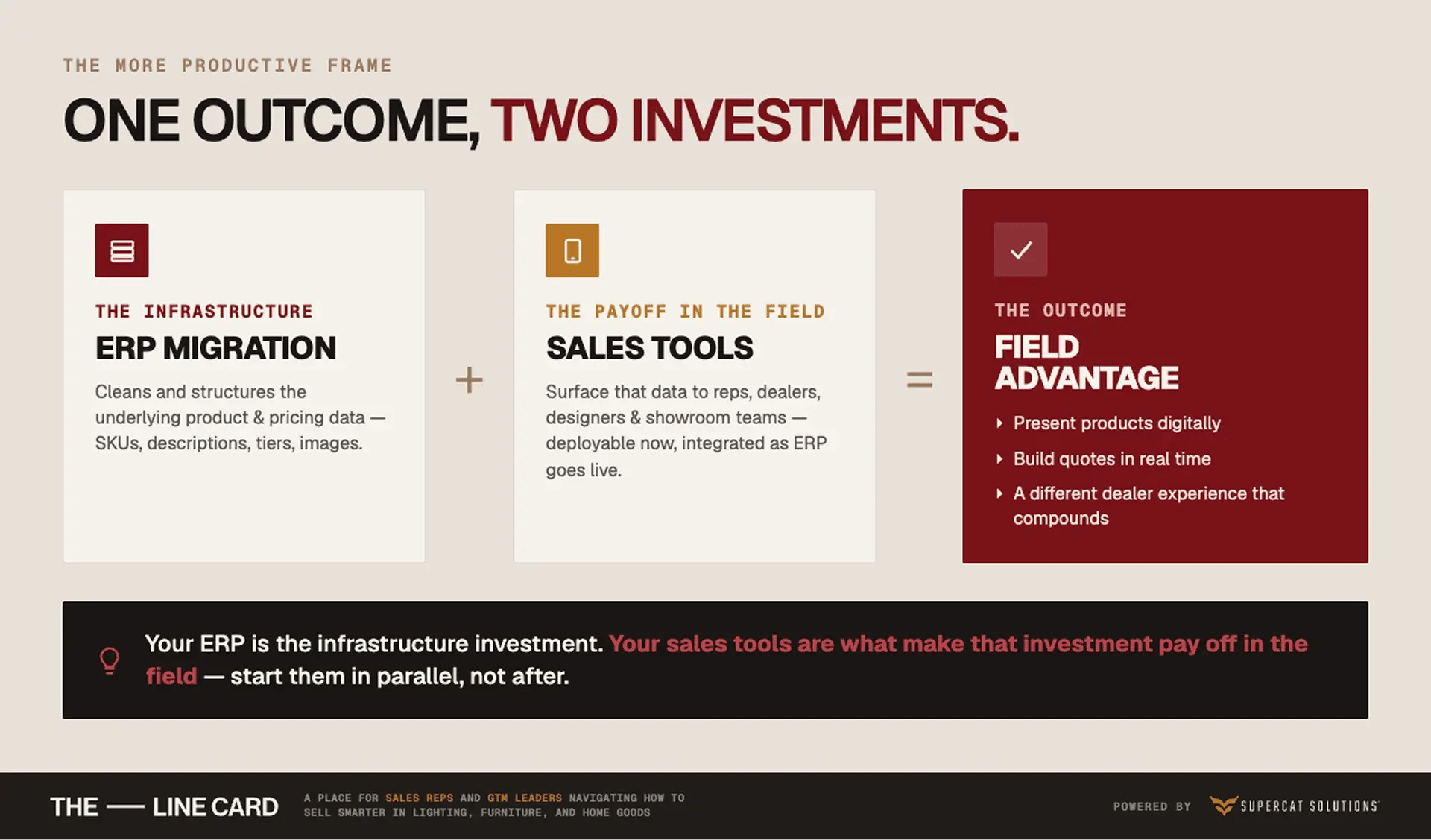
The more productive frame is this: ERP migration and sales enablement are parallel investments in the same outcome.
The ERP migration cleans and structures underlying product and pricing data. Sales enablement tools surface that data to the people who need it: field reps, dealers, designers, and showroom teams. The two investments reinforce each other. But they don't need to be completed in sequence to begin delivering value.
Implement sales tools alongside your ERP migration, not after it. Your ERP is the infrastructure investment. Your sales tools are what make that investment pay off in the field.
A mobile sales tool or digital catalog needs structured product data: SKUs, descriptions, pricing tiers, and product images. That data exists in some form before the ERP migration concludes, often in spreadsheets, legacy systems, or existing product databases. Sales enablement tools can be deployed against that data now, and integrated more deeply with the new ERP as it goes live.
A manufacturer that begins implementing sales tools during their ERP migration positions their field team to enter the next selling season with new capabilities. Reps can present products digitally, build quotes in real time, and deliver a fundamentally different experience to dealers. That advantage compounds. The alternative — waiting for the perfect moment — reliably means missing another season.