
Read Time 6 mins
At the 2025 trade shows, you could feel a shift in the air.
The booths that drew the biggest crowds were where technology and craftsmanship met. Sales reps weren’t flipping through binders or searching for missing specs anymore. They were closing deals on tablets, updating digital catalogs in real time, and syncing entire product lines before the show floor even closed.
What began in 2025 as a widespread shift toward digital catalogs, real-time quoting, and mobile tools has now evolved into something bigger. In 2026, the industry is moving beyond experimentation toward integration, data-driven operations, and connected ecosystems that seamlessly link manufacturers, reps, and dealers.
Here are the five technology trends continuing to shape furniture and lighting in 2026, built on the progress made last year and now redefining how the industry designs, sells, and grows.
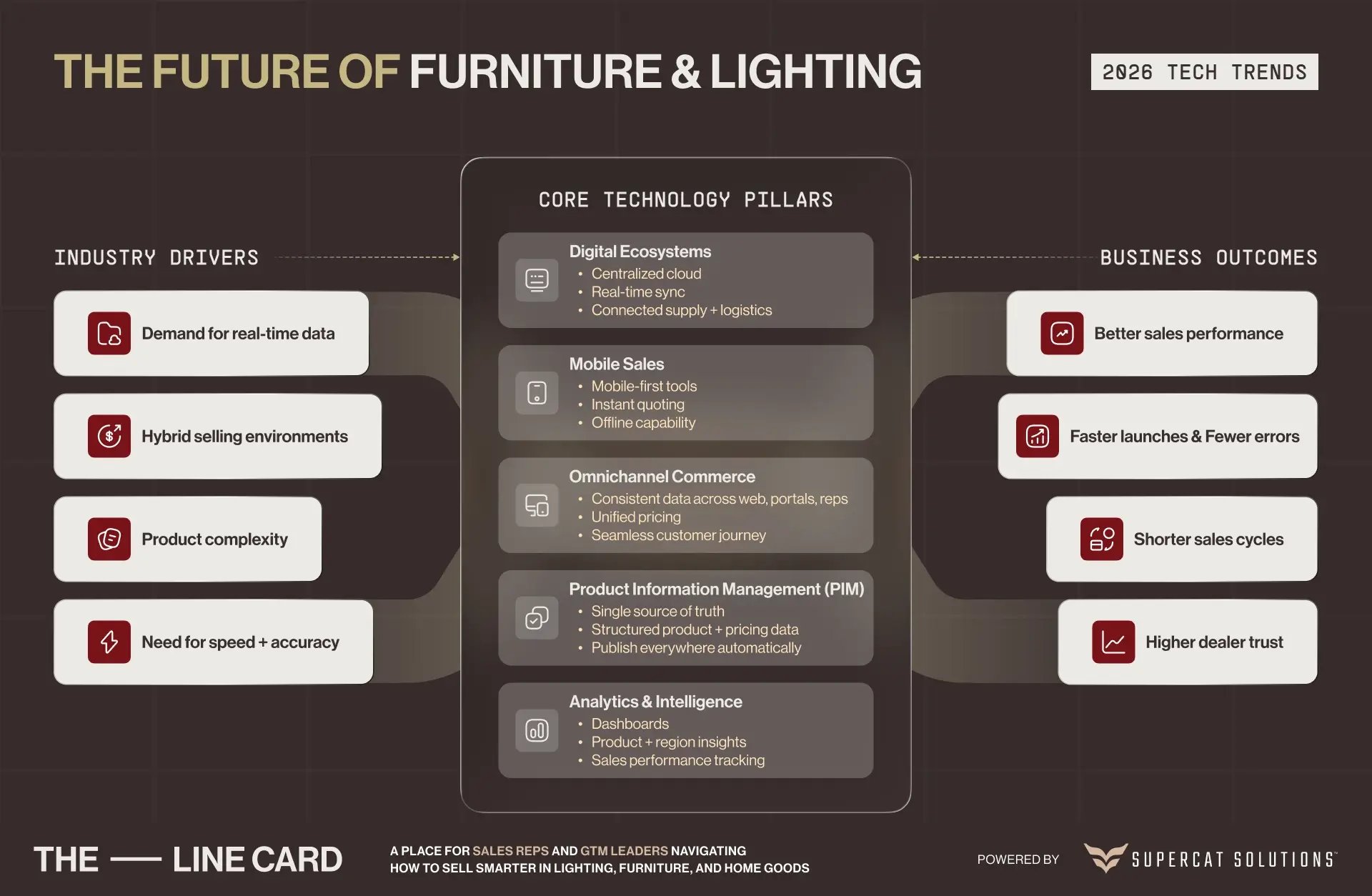
1. Digital Transformation Becomes Business-as-Usual
Among the leading furniture and lighting technology trends, none has been more transformative than digital transformation in manufacturing and distribution.
What once sounded like a distant goal is now the baseline expectation.
Manufacturers and distributors that still rely on spreadsheets, scattered emails, or printed price sheets will struggle to compete in a market where real-time data and cloud-based collaboration have become standard.
From Platform to Ecosystem
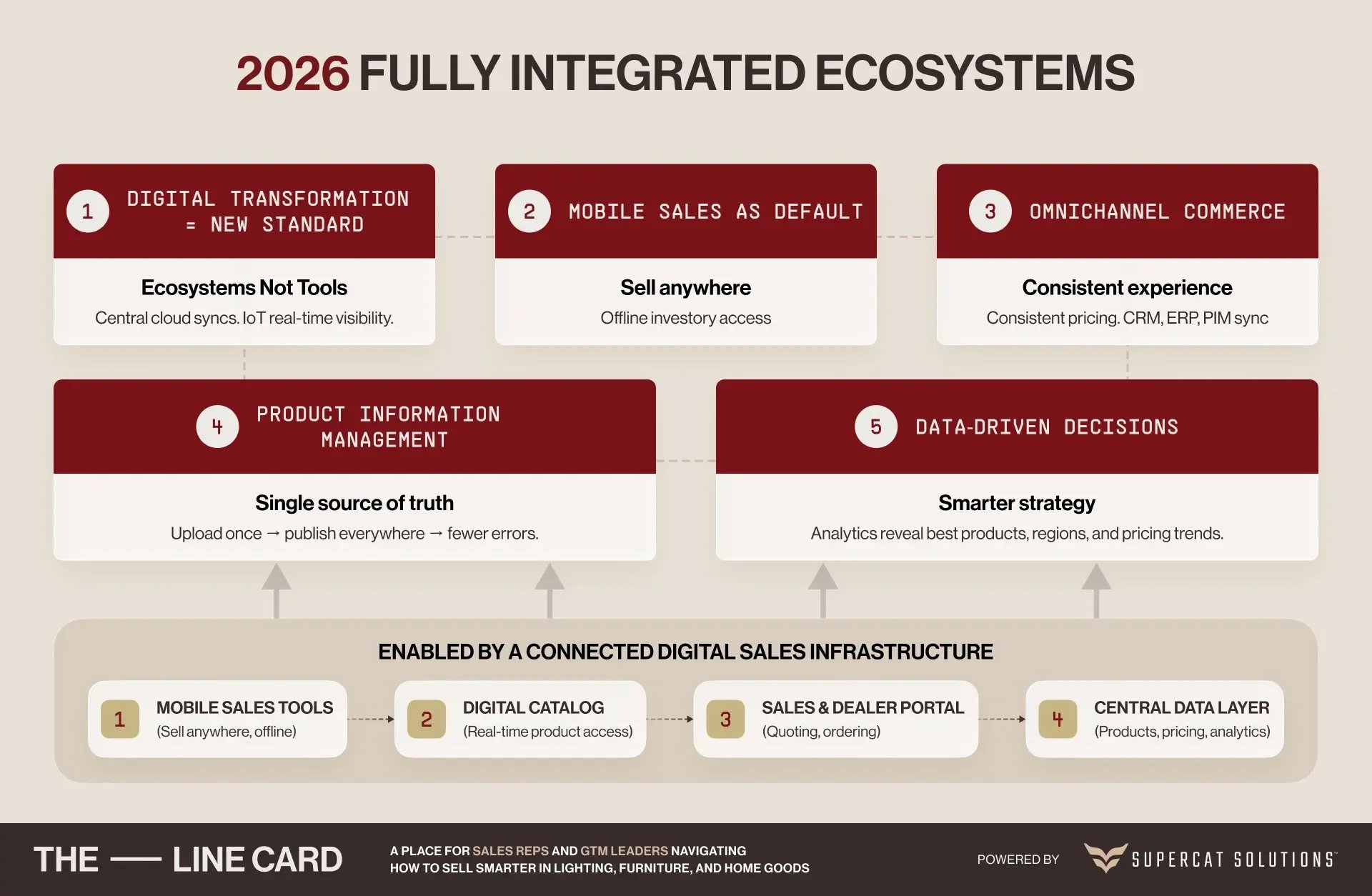
Top brands are moving beyond standalone tools to fully integrated digital ecosystems.
When a lighting finish is discontinued or a furniture fabric is updated, that change now flows automatically from a centralized cloud platform syncing across websites, rep apps, and dealer portals.
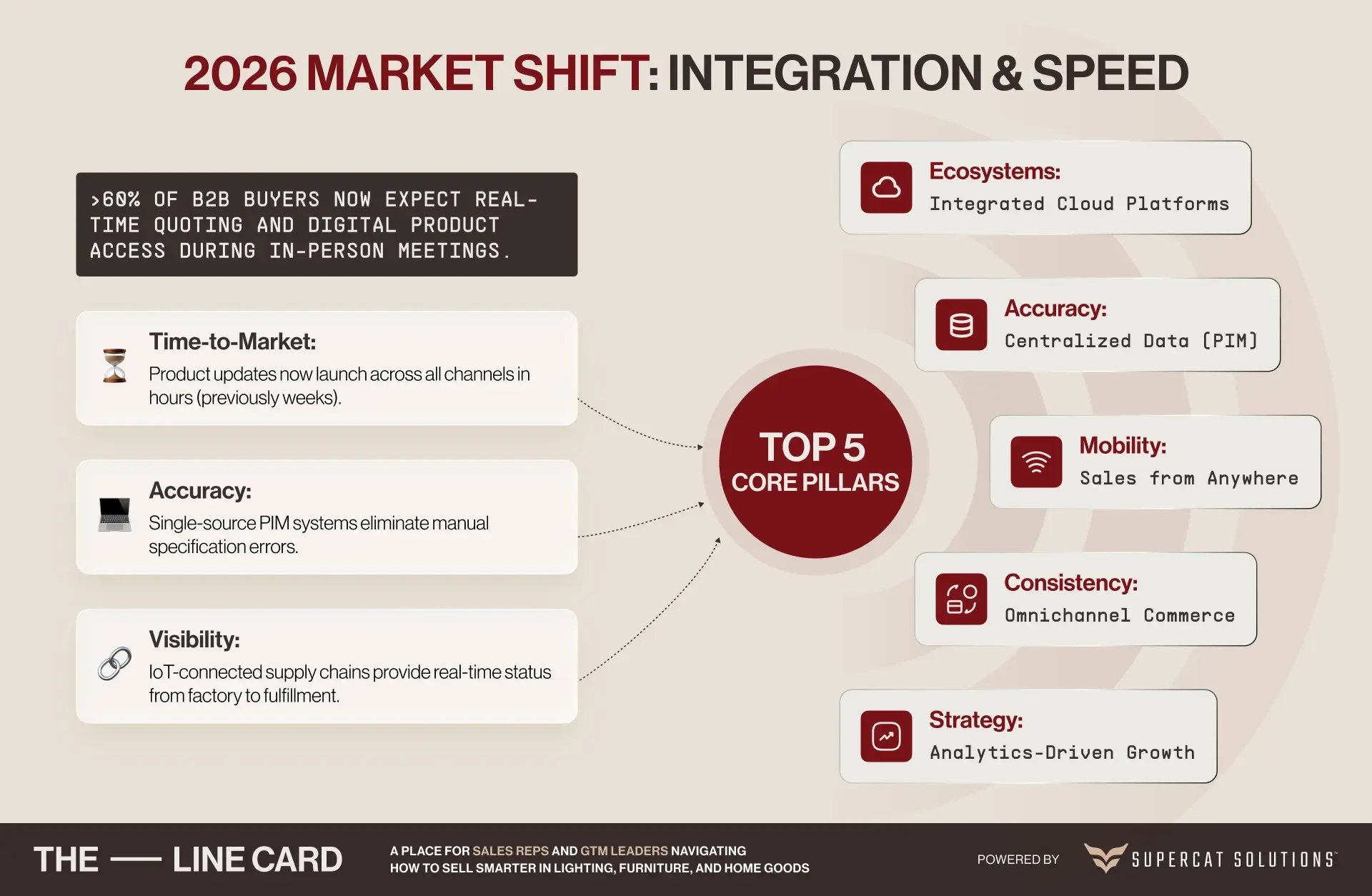
For instance, when a brand launches a new collection in January, all sales materials, specifications, and imagery can be live across every channel within hours instead of weeks.
Smarter Production and Fulfillment
IoT-based monitoring and cloud-connected factories continue to reshape how products move from concept to customer.
By connecting suppliers, production lines, and logistics teams in real time, brands gain visibility across their entire supply chain, making delivery delays and miscommunications increasingly rare.
2. Mobile Sales Enablement Becomes the Default
The hybrid sales model is here to stay. Whether it’s High Point Market, Lightovation, or private showroom visits, reps need to sell anytime, anywhere.
Beyond the Booth
According to industry data, more than 60% of B2B buyers now expect real-time quoting and digital access to product information during in-person meetings or showroom visits.
Modern sales apps allow reps to build accurate quotes, visualize configurations, and confirm inventory in seconds, even when Wi-Fi is limited, such as on the trade show floor.
3. Omnichannel B2B Commerce Connects the Dots
Designers and dealers now prioritize a consistent interaction across platforms. Of all furniture and lighting technology trends, omnichannel commerce has the greatest impact on the customer journey.
Seamless from Web to Showroom
A designer who finds a chandelier online expects to see the same product, price, and data in their dealer portal or when meeting a rep. Omnichannel commerce ensures that what they see in one place matches everywhere else.
System Integration Takes Center Stage
Behind the scenes, brands are connecting CRM, ERP, and PIM systems to keep sales and operations in sync. When an order is placed, inventory updates automatically, production starts instantly, and analytics capture performance in real time.
4. Product Information Management (PIM) Powers Growth
Among all furniture and lighting technology trends, Product Information Management (PIM) remains one of the most practical and profitable investments.
The Power of Structured Data
Each SKU, dimension, finish, and price point feeds automatically into every digital channel, ensuring data consistency across websites, digital catalogs, and sales tools. This creates a single source of truth that eliminates errors and builds trust with dealers and designers.
Faster Launches, Fewer Errors
When launching new collections, teams can now upload once and publish everywhere, saving time and preventing mistakes. For instance, a lighting brand introducing 40 new fixtures can update eCat, the dealer portal, and its website from one admin console.
5. Data-Driven Decision-Making Redefines Growth
The final piece in the 2026 puzzle of furniture and lighting technology trends is data.
From Gut Feel to Measured Strategy
Analytics dashboards will help brands understand which product lines perform best by region, season, or price point. Instead of guessing which finishes promoting, managers will rely on real-time sales insights to guide production and marketing.
Smarter Sales Performance Tracking
Sales leaders use real-time data to track rep productivity, quoting speed, and conversion rates. This visibility enables better coaching, targeted incentives, and a higher-performing sales team, which are hallmarks of data maturity in furniture and lighting technology trends.
How SuperCat Helps You Lead in 2026
SuperCat Solutions brings these trends to life through a connected suite of tools built for manufacturers and distributors:
- eCat iPad App – display collections beautifully, quote instantly, and sell confidently at trade shows or showrooms
- eCat Online – give dealers and designers real-time access to your latest digital catalog and ordering tools
- Sales Portal – track quotes, analyze performance, and manage dealer communication in one place
- Admin Console – update product data, pricing, and assets once, sync everywhere automatically
Together, these tools form a unified digital sales ecosystem, helping furniture and lighting brands modernize, grow, and stay at the forefront of furniture and lighting technology trends.