
Read Time 13 mins
Lightovation stands as the premier lighting trade show in North America, drawing thousands of buyers, designers, and industry professionals to the Dallas Market Center each January. For lighting and furniture brands, this event represents a critical opportunity to showcase new collections, connect with key buyers, and secure orders that will shape the year ahead.
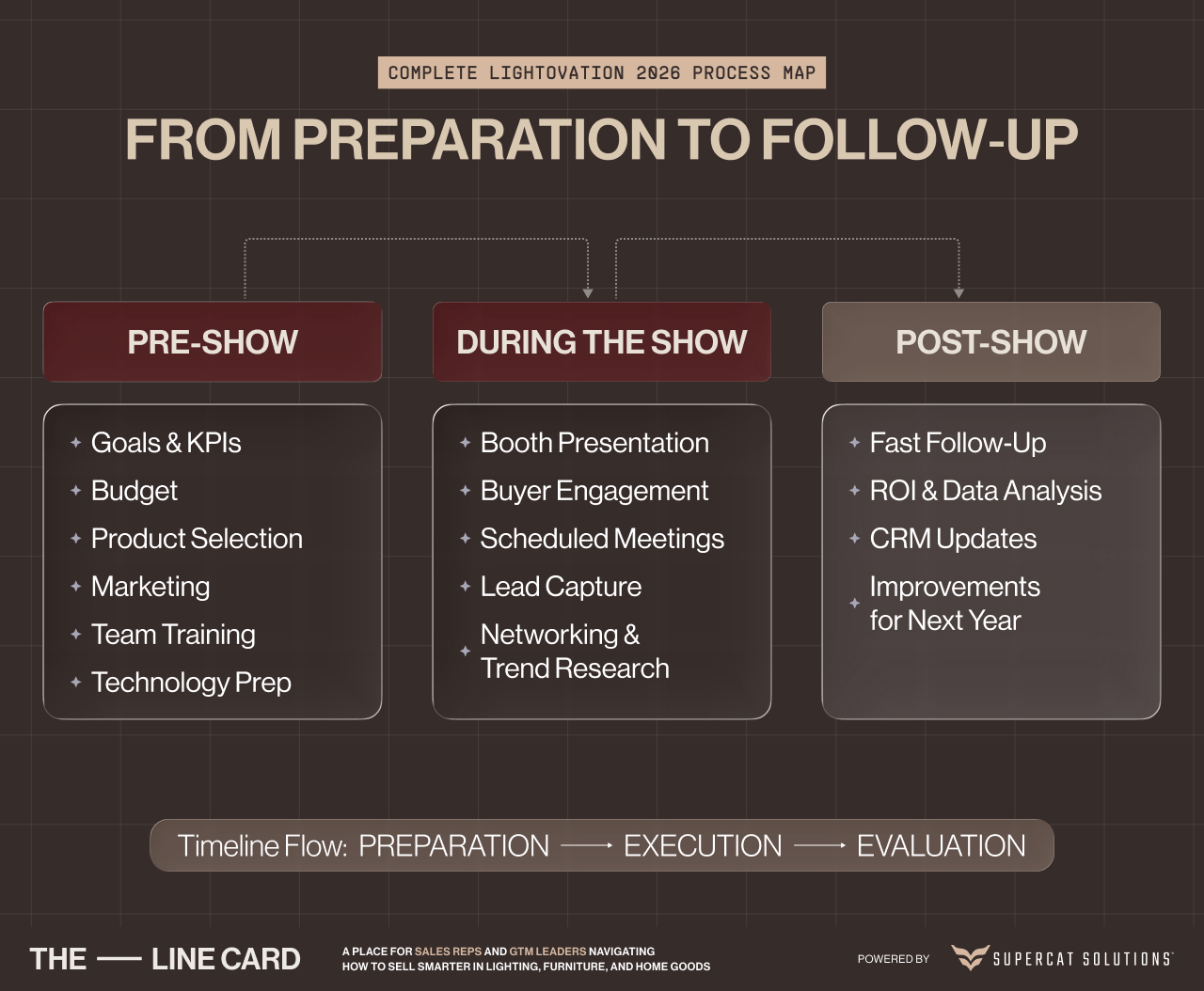
Success at Lightovation 2026 requires meticulous planning that begins months before the show floor opens. This comprehensive checklist will guide your brand through every stage of preparation, from initial registration to post-show follow-up, ensuring you maximize your investment and stand out in a competitive marketplace.
Pre-Show Planning and Registration
Define Your Show Objectives
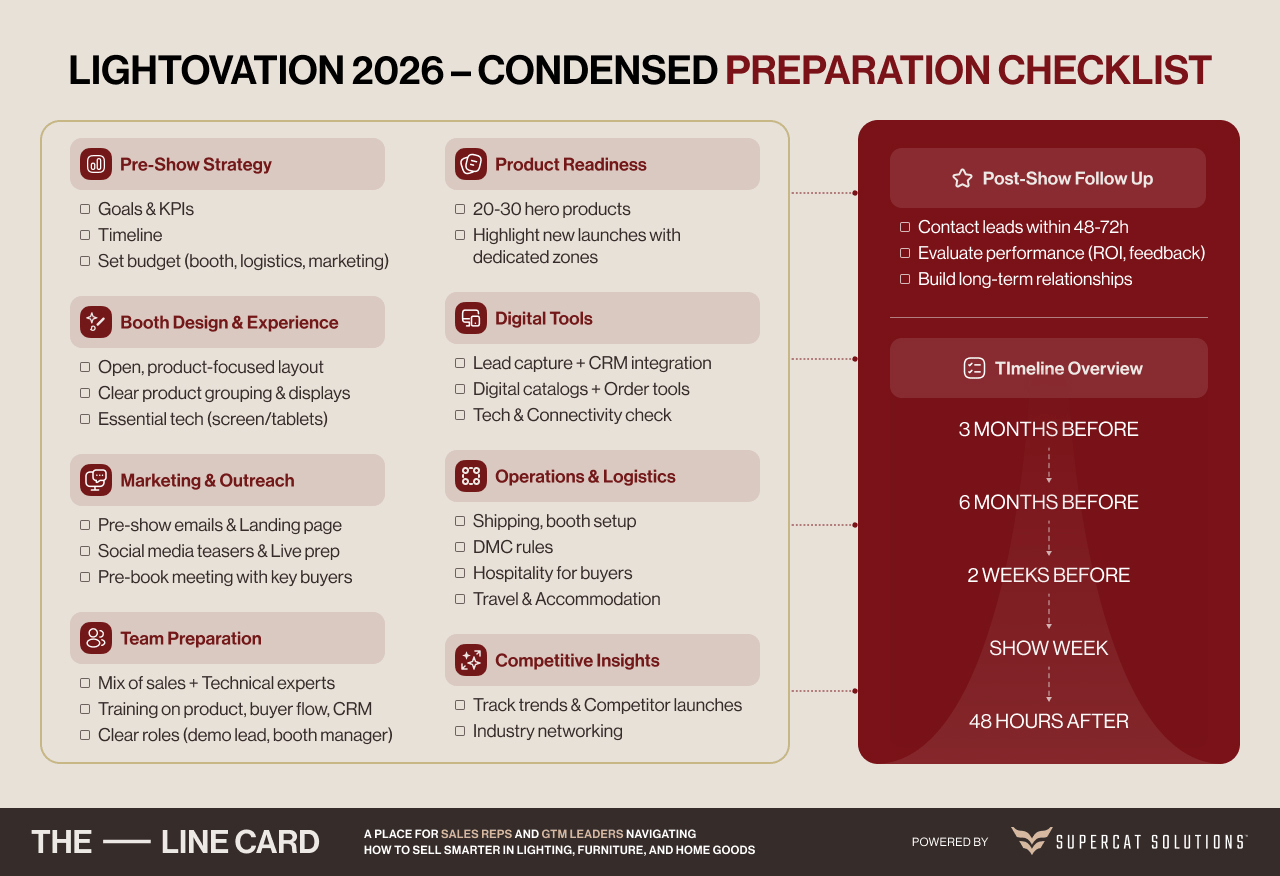
Establish clear, measurable goals before committing resources to the show. Are you launching a new product line, expanding into new market segments, or strengthening relationships with existing buyers? Your objectives will shape every decision from booth design to staffing levels.
Quantify your targets where possible. Set specific goals for the number of new buyer meetings, anticipated order volume, or leads to generate at Lightovation 2026. These metrics provide accountability and help justify your trade show investment to stakeholders.
Budget Allocation and Financial Planning
Trade show expenses extend far beyond booth rental fees. Create a comprehensive budget that accounts for booth construction and graphics, product samples and displays, staff travel and accommodation, marketing materials, shipping and logistics, hospitality and entertainment, and technology needs.
Furniture brands should also factor in scale-related costs, such as larger samples, reinforced flooring, freight weight, and installation labor, since these can significantly impact total spend if overlooked.
Booth Design and Setup Strategy
Create an Inviting Space
Your booth serves as your brand's physical manifestation for four intensive days at Lightovation 2026. The design should reflect your brand identity while creating an environment that encourages buyers to step inside and engage with your products.
Open floor plans with minimal barriers invite exploration. Avoid cluttered displays that overwhelm visitors. Instead, curate your product selection to showcase your strongest offerings and newest innovations. Lighting itself becomes your most powerful design tool to demonstrate the quality and versatility of your products through thoughtful installation.
Optimize Product Display
Feature your star products at eye level in high-traffic areas of your booth. Create vignettes that show products in context, helping buyers envision how the fixtures will look in residential or commercial settings. Group complementary products together to encourage larger orders.
Include clear product information cards with model numbers, specifications, pricing, and lead times. Buyers appreciate being able to gather this information independently before engaging with sales staff.
Incorporate Technology Thoughtfully
Digital tools can enhance the buyer experience when used strategically at Lightovation 2026. Large screens displaying your product catalog, installation guides, or case studies provide valuable information without requiring staff interaction. Tablets allow buyers to browse your full line, customize finishes, or submit orders directly from the booth.
However, technology should support human connection, not replace it. Ensure your booth doesn't become a barrier of screens that isolate visitors from meaningful conversations with your team.
Marketing and Promotion at Lightovation 2026
Pre-Show Communication Campaign
Begin reaching out to your target buyers at least six weeks before the show. Send personalized emails to existing customers and prospects, announcing your participation and inviting them to visit your booth. Highlight any exclusive show specials, new product launches, or special events you're hosting.
Include your booth number prominently in all communications. Create a simple landing page with show details, sneak peeks of new products, and an appointment scheduling tool.
Leverage Social Media
Build anticipation through strategic social media posts in the weeks leading up to Lightovation. Share behind-the-scenes content of your preparation, tease new product launches, and create countdown posts. Use the official show hashtag alongside your brand hashtags to increase visibility.
During the show, post daily updates, product highlights, and booth visitor testimonials. Live video gives your broader audience a sense of participation and generates interest for future shows.
Schedule Appointments in Advance
Pre-scheduled appointments ensure you connect with your most essential buyers during the show's hectic pace. Reach out to key accounts and high-potential prospects to arrange specific meeting times. Block out these appointments in your team's calendar to prevent double-booking.
Reserve prime time slots, typically mid-morning and early afternoon, for your most strategic meetings. These times offer optimal energy levels and fewer distractions than early morning or late afternoon.
Lightovation Staffing and Team Preparation
Select the Right Team Members
Staff your booth with individuals who combine product knowledge, sales skills, and genuine enthusiasm for your brand. A mix of experienced sales reps and product specialists provides versatility in addressing different buyer needs.
Plan for adequate coverage throughout all show hours, including slower periods. Fatigued staff send negative signals to potential buyers. Schedule breaks and shifts to maintain high energy levels across all four days.
Conduct Pre-Show Training
Hold team meetings before the show to review objectives, new products, pricing structures, and show specials. Ensure everyone can articulate your brand's unique value proposition and competitive advantages.
Role-play standard buyer scenarios and objections. Discuss how to qualify leads effectively, transition from casual conversation to substantive discussion, and handle pricing negotiations. Establish clear protocols for capturing buyer information and following up on leads.
Define Roles and Responsibilities
Assign specific responsibilities to team members to maximize efficiency. Designate lead capture specialists, product demonstrators, technical experts, and relationship managers. Clear roles prevent confusion and ensure comprehensive booth coverage.
Identify a show floor manager who oversees operations, addresses problems, and coordinates with show organizers. This person should remain available throughout show hours rather than becoming tied up in lengthy buyer conversations.
Product Preparation and Inventory
Curate Your Product Selection
Resist the temptation to display your entire catalog. Focus on 20-30 key products that represent your brand's strengths and current market opportunities. Include a balance of proven bestsellers, recent successful launches, and exciting new introductions.
Ensure sufficient inventory of sample products, specification sheets, and any limited-edition pieces you're featuring. Nothing damages credibility more than running out of basic materials mid-show.
Prepare New Product Launches
Lightovation provides an ideal platform for introducing new collections. Create dedicated display areas that give new products prominence without overshadowing established lines. Prepare detailed launch materials including inspiration stories, technical specifications, and pricing information.
Consider hosting a specific time for new product reveals, creating an event within the broader show. Promoted properly, this drives booth traffic and generates buzz across the show floor.
Technology and Digital Tools
Implement Lead Capture Systems
Manual business card collection creates data entry burdens and risks losing valuable leads. Digital lead capture tools streamline information gathering and enable immediate follow-up. Choose systems that integrate with your CRM for seamless post-show workflow.
Capture not just contact information but also specific interests, buying timeline, and conversation notes. This context proves invaluable when following up after the show.
Offer Virtual Catalogs and Ordering
Tablet-based catalogs allow buyers to explore your complete product range beyond what's physically displayed. Include high-resolution images, 360-degree views, detailed specifications, and finish options. Enable buyers to create wish lists or place preliminary orders directly from these digital tools.
Ensure your technology works reliably under show conditions. Test all devices, verify internet connectivity, and have backup devices and power solutions ready.
Prepare Your Digital Infrastructure
Verify that your website showcases Lightovation participation and highlights new products. Ensure your online catalog reflects current pricing and availability. Check that inquiry forms and contact information function properly, as show-driven traffic may exceed normal volumes.
Update your Google Business Profile and other online listings to mention your Lightovation presence. This captures search traffic from buyers researching exhibitors before arriving at the show.
Logistics and Operations
Coordinate Shipping and Installation
Understand the Dallas Market Center's shipping guidelines, receiving schedules, and installation timeframes. Arrange for products and booth materials to arrive according to the venue's requirements, allowing sufficient time for setup.
Label all shipments clearly with your booth number and use the designated freight carrier when required. Late or misdirected shipments create unnecessary stress during setup days.
Plan Hospitality and Entertainment
Many successful exhibitors host special events to strengthen buyer relationships. Consider breakfast meetings, cocktail receptions, or private dinners for key accounts. These relaxed settings facilitate deeper conversations than the busy show floor allows.
Keep events intimate and strategic. A well-executed dinner for 15 important buyers delivers better ROI than a large reception with marginal prospects.
Arrange Accommodation and Transportation
Book hotel rooms early, as Dallas hotels near the Market Center fill quickly during Lightovation. Many exhibitors stay at properties within walking distance or served by shuttle services. Coordinate room blocks for your team to simplify logistics and control costs.
Arrange ground transportation between the airport, hotels, and venue. Consider the needs of buyers visiting from out of state who may appreciate transportation assistance.
Competitive Intelligence and Market Research
Observe Industry Trends
Beyond promoting your own products, Lightovation offers invaluable insights into market direction. Note which styles, finishes, and technologies appear frequently across multiple booths. Pay attention to how competitors position their brands and price their products.
Walk the show floor systematically, documenting observations about design trends, emerging technologies, and buyer sentiment. These insights inform product development and marketing strategies for the coming year.
Network with Industry Peers
Trade shows bring together the lighting and futniture communities in ways that don't happen elsewhere. Attend show-sponsored events, participate in educational sessions, and engage in genuine conversations with other exhibitors. These connections often lead to valuable partnerships, vendor relationships, or market intelligence.
Balance networking time with booth coverage responsibilities, but recognize that relationship building extends beyond just buyer interactions.
Post-Show Follow-Up
Execute Immediate Follow-Up
The momentum generated during Lightovation dissipates quickly without prompt follow-up. Contact leads within 48-72 hours while your conversation remains fresh in their minds. Reference specific details from your discussion to demonstrate genuine interest.
Prioritize hot leads who indicated immediate purchasing intent or specific project needs. Follow up with warm leads within a week, and nurture cooler prospects through your regular marketing channels.
Analyze Show Performance
Review your performance against the objectives established during pre-show planning. Calculate metrics like cost per lead, conversion rates, and total order value compared to show investment. Gather feedback from your team about what worked well and what needs improvement.
Document lessons learned while details remain clear. These insights prove invaluable when planning for future shows, helping refine your approach and avoid repeating mistakes.
Nurture Long-Term Relationships
Not every conversation yields immediate orders. Many buyers visit Lightovation to research options for projects still in development. Add these prospects to nurture campaigns with regular updates about new products, case studies, and industry insights.
Send personalized thank-you notes to buyers who placed orders or committed to future business. These small gestures strengthen relationships and demonstrate that you value their partnership beyond the transaction.
Financial Management and ROI
Track All Show-Related Expenses
Maintain detailed records of every cost associated with Lightovation participation. Beyond obvious expenses like booth rental and travel, capture smaller costs that add up significantly, such as meals, shipping overages, last-minute material printing, and equipment rentals.
Accurate expense tracking enables precise ROI calculation and more realistic budgeting for future shows.
Measure Return on Investment
Calculate your show ROI by comparing total revenue generated from show leads against your total investment. Include both immediate orders written during the show and sales that close within three to six months as a direct result of show connections.
Remember that trade show value extends beyond immediate sales. Factor in brand awareness, competitive intelligence, and relationship strengthening with existing accounts when evaluating overall return.
Plan Continuous Improvement
Use performance data and team feedback to refine your approach for the next Lightovation. Identify which strategies delivered strong returns and deserve expanded investment. Eliminate tactics that consume resources without yielding proportional results.
Successful exhibitors treat each show as an iteration in an ongoing process of improvement, rather than as an isolated event.
6 Steps to Lightovation 2026 Success: Essential Timeline Checklist
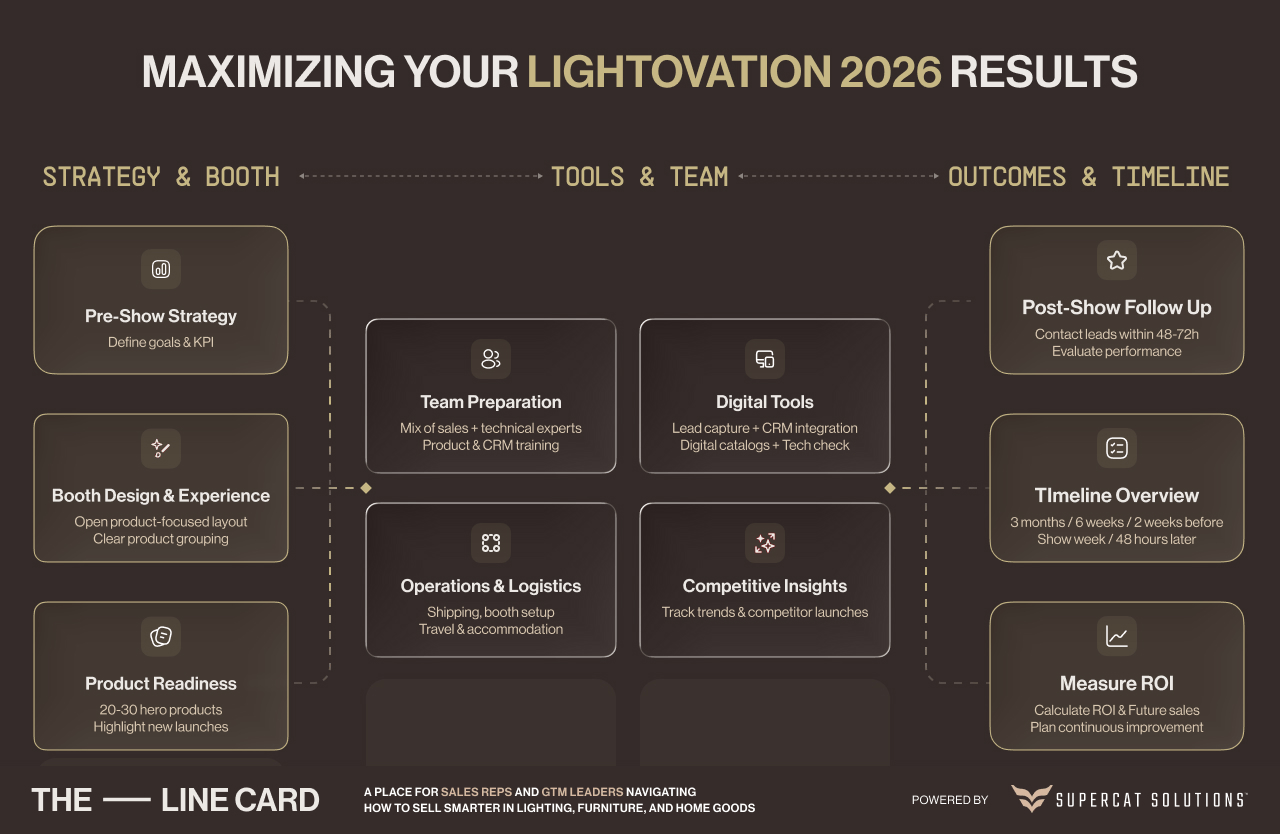
Your preparation timeline should include these key milestones to ensure trade show success:
Three Months Before
Finalize the booth design, order graphics and displays, begin outreach to key buyers and prospects, schedule appointments with major accounts, create pre-show marketing campaign content, and arrange travel and accommodation in Dallas.
Six Weeks Before
Send pre-show marketing communications to target buyers, finalize product selection and prepare samples, complete staff training on products and processes, test lead capture technology and systems, and create a social media content calendar for show promotion.
Two Weeks Before
Confirm all logistics and shipping arrangements, test technology tools and backup systems, ship booth materials and products to Dallas Market Center, finalize lead capture and follow-up systems, and brief the team on the final show strategy and responsibilities.
Show Week
Execute the setup according to plan, ensure booth professionalism and high energy throughout show hours, engage buyers effectively with a consultative approach, and capture detailed lead information with qualifying notes. Network strategically with industry peers, document competitive intelligence, and market trends.
Immediately After
Begin follow-up with hot leads within 48 hours, analyze performance data against objectives, gather comprehensive team feedback on what worked, calculate ROI and cost metrics, plan improvements for next year's show, update CRM with all lead information and conversation notes.