
Read Time 7 mins
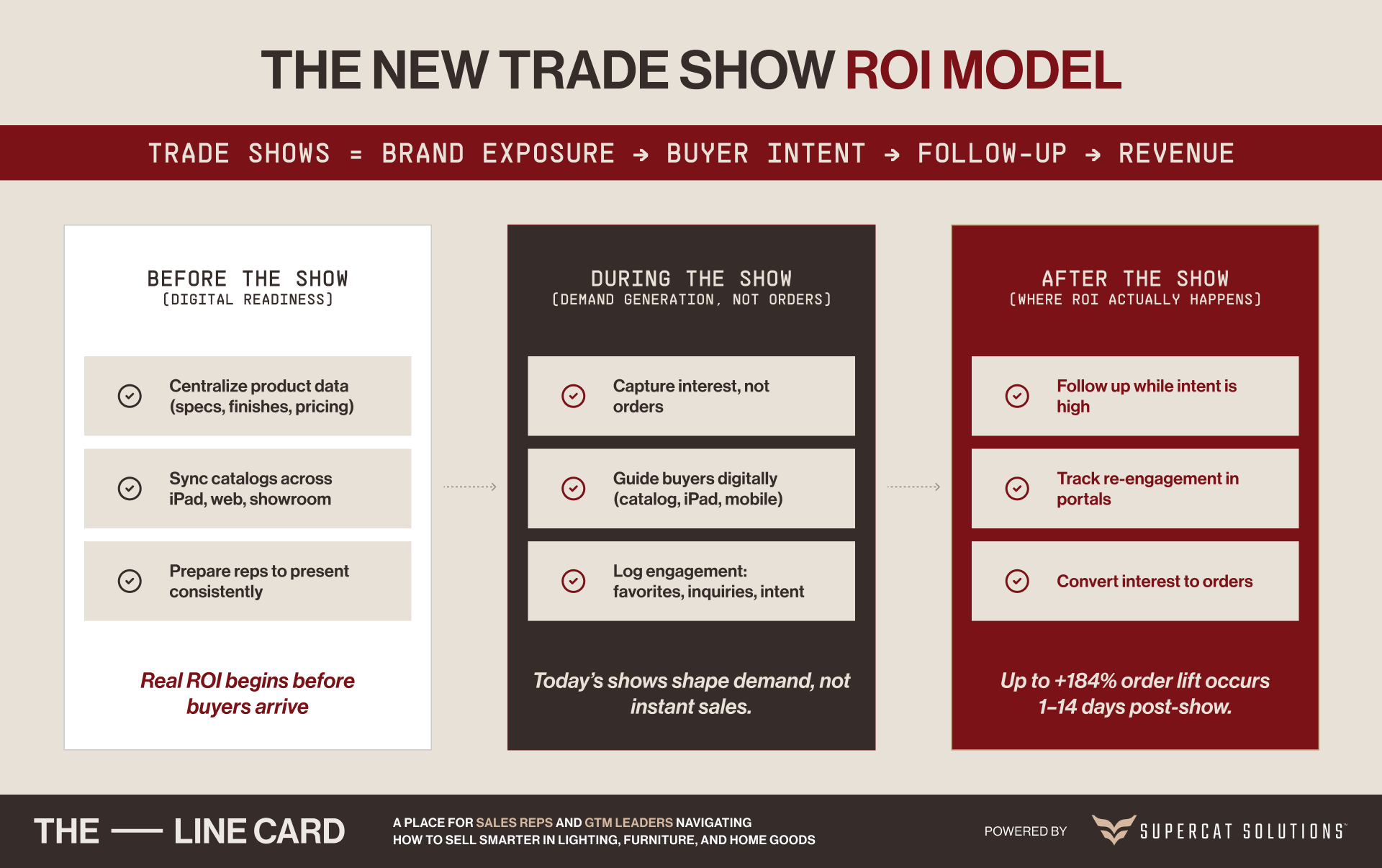
For decades, markets like High Point and Lightovation set the rhythm of the furniture and lighting industry. A few busy days could generate a third of annual orders. But that era is over.
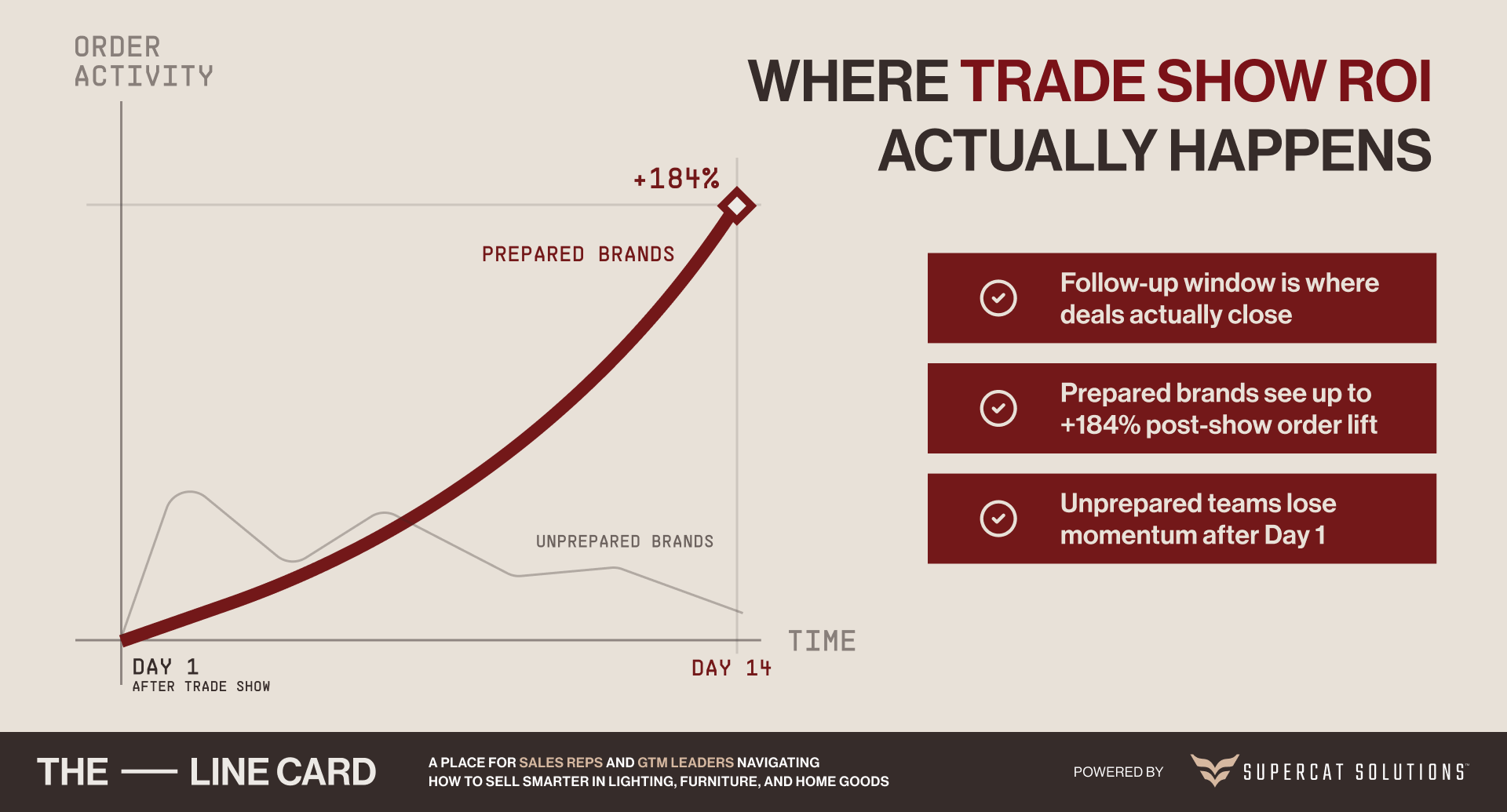
Today, trade shows are no longer “order-writing events.” They’ve become brand and relationship accelerators, immersive experiences that build awareness, influence buying intent, and spark demand that pays off later. The real ROI appears 1–14 days after market, when well-prepared teams see an order surge, sometimes up to +184% while others lose momentum to poor data and slow follow-up.
Modern success depends less on booth design and more on data readiness, rep enablement, and post-show execution. Markets are now where relationships start, not where they close.
In short, trade shows are about marketing and demand generation, not instant selling, and the brands that understand this shift are redefining what ROI truly means.
The New Role of Trade Shows
Markets are backgrounds where retailers, designers, and distributors come to discover new lines, compare collections, and experience a brand in person.
Manufacturers that see these events as relationship accelerators rather than one-time sales opportunities are the ones seeing sustained growth.
- Success now looks less like “orders written at the booth” and more like:
- Buyers requesting digital line sheets or showroom recaps
- Reps collecting interest lists to follow up later
- Dealers logging into online catalogs to check pricing or inventory
- Marketing teams tracking post-show activity to guide future launches
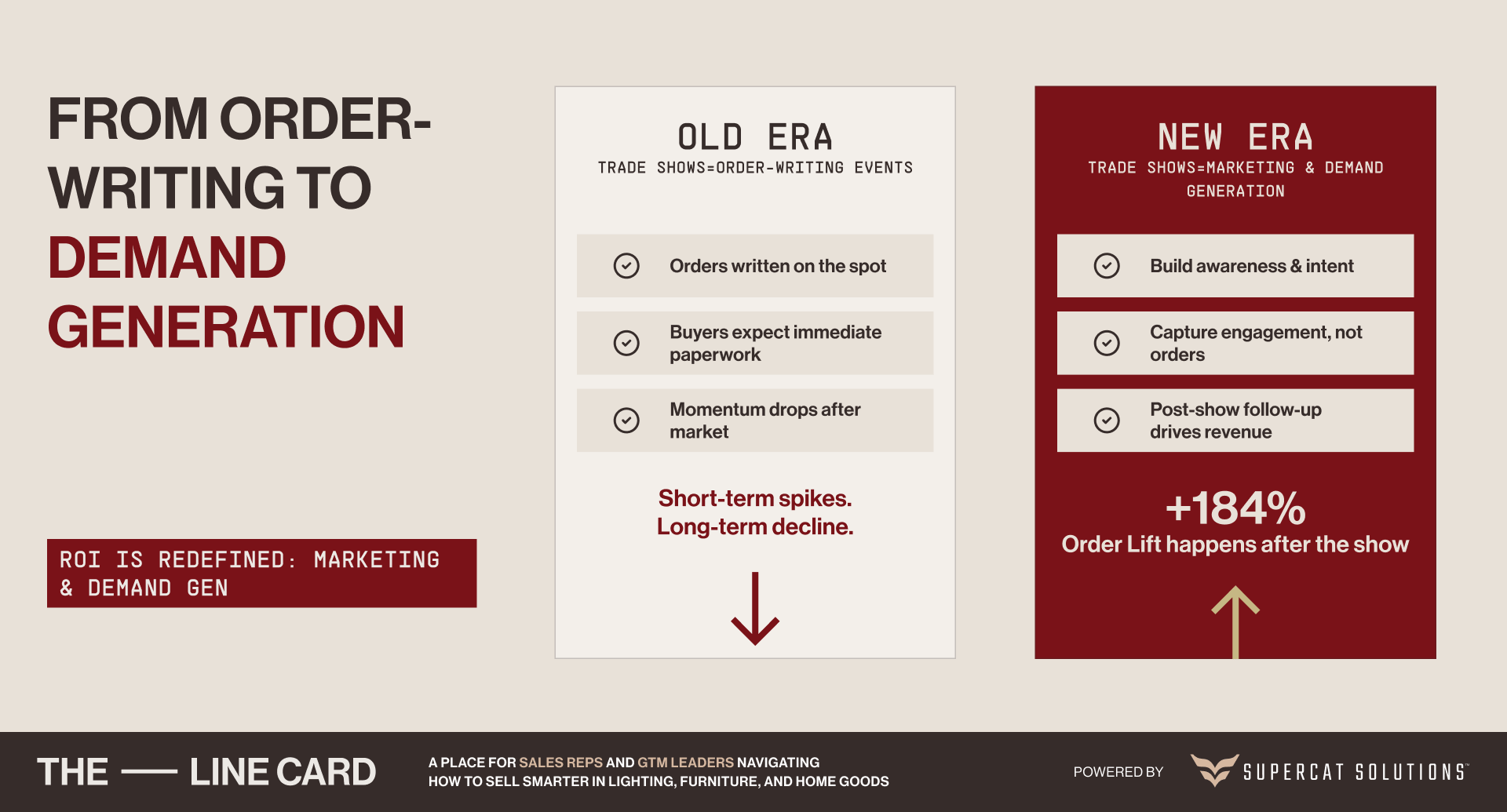
The new ROI cycle begins with exposure in markets and showrooms, grows through buyer interest and engagement, continues with thoughtful follow-up from reps, and ultimately results in a confirmed order once trust and familiarity are established.
Before the Show: Set Up for Digital Success
Real ROI starts long before the first buyer walks through the door. Manufacturers that centralize product information specs, images, finishes, and pricing give their reps and showrooms a foundation for presenting collections consistently.
With tools like a Product Information Management (PIM) system, product data stays synchronized across catalogs, tablets, and portals. So when new items launch or pricing changes, updates are live everywhere instantly.
This gives teams greater confidence and consistency, reducing mistakes, speeding up pre-show preparation, and ensuring every rep presents the same cohesive brand story from the very beginning.
During the Show: Capture Interest, Not Just Orders
Trade shows are a chance to tell your brand story, showcase new collections, and create demand that fuels future sales. Buyers come to explore, compare, and get inspired, not to place orders on the spot.
That’s why presentation and accessibility matter. With digital catalogs and mobile sales tools, reps can walk buyers through full collections, highlight finishes or configurations, and capture favorites or inquiries for later follow-up without interrupting the flow of conversation.
Every interaction becomes part of a broader marketing effort: interest is logged, product engagement is tracked, and insights are shared across the team. By the time the show ends, your brand has built a foundation of visibility and intent that turns into sales after the event.
After the Show: Where ROI Is Really Made
During the show, the focus is on marketing, showcasing the brand, sparking interest, and building relationships. But the real selling happens afterward. That’s when reps follow up with buyers, share quotes, and turn conversations into orders.
With the online platform and the sales portal, dealers can revisit the collections they explored, check updated pricing, and place orders directly connected to the same reliable product data. At the same time, sales managers can see which buyers re-engage, which lines drive attention, and where those follow-ups turn into revenue.
By linking marketing efforts from the show with post-show sales activity, brands transform awareness into measurable results and long-term growth.
Measuring Trade Show ROI
When these three stages work together, trade shows evolve from single events into full marketing and sales engines. Preparation ensures data accuracy, showtime builds awareness, and post-show follow-up turns that interest into measurable revenue.
That’s why the true value of a market presence lies in how effectively brands track engagement, manage relationships, and close the loop between exposure and order.
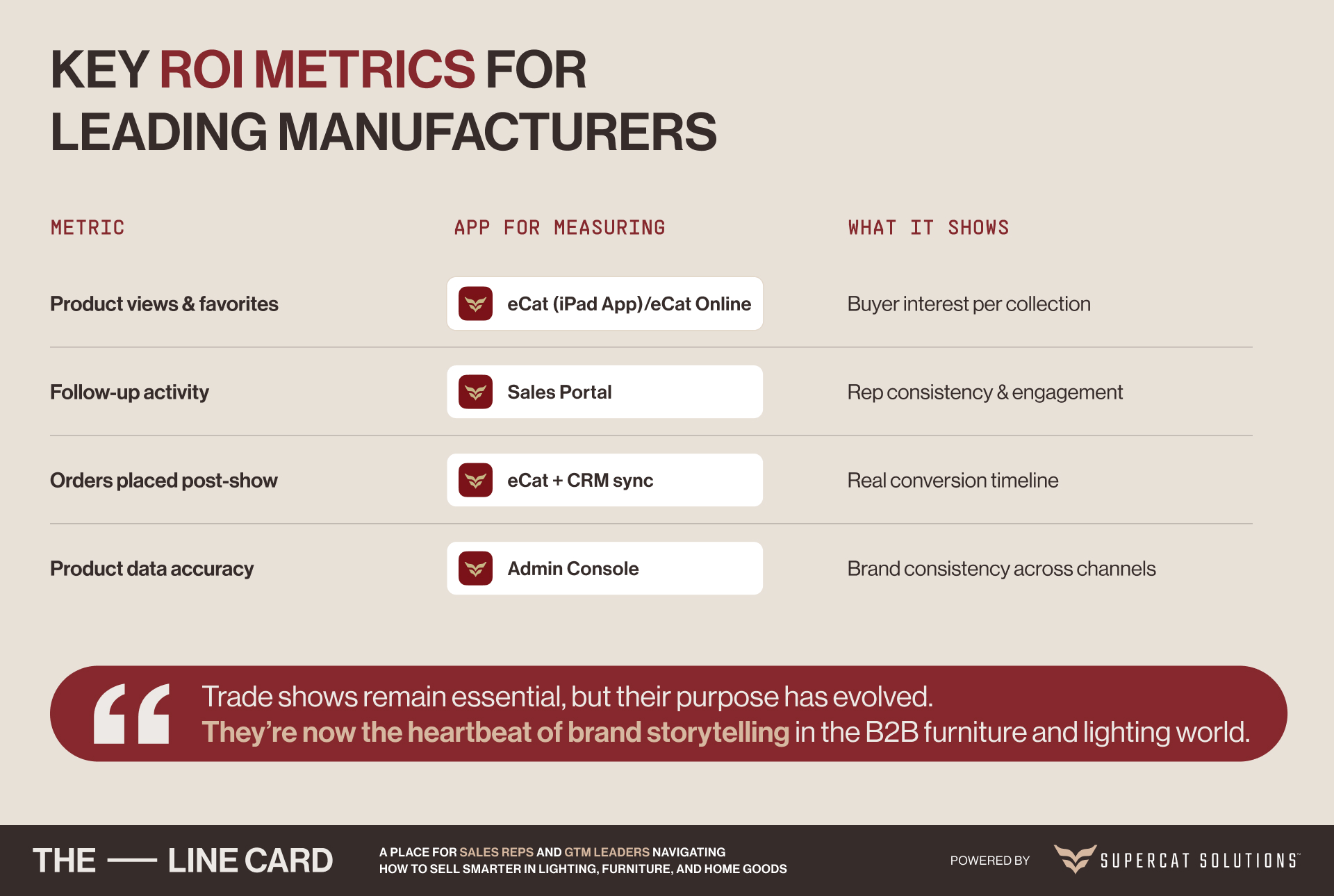
Here’s what leading furniture and lighting manufacturers now measure to understand real ROI:
The Future of Trade Show ROI
Trade shows remain essential, but their purpose has evolved. They’re now the heartbeat of brand storytelling in the B2B furniture and lighting world.
Manufacturers that blend showroom presence with digital follow-through are redefining what success looks like. With the right tools, every handshake, every collection viewed, and every follow-up becomes part of one connected ecosystem.
Ready to Modernize Your Market Strategy?
SuperCat Solutions helps furniture and lighting brands connect every stage of the buyer journey. Explore how eCat, eCat Online, and the Sales Portal can turn your next market into measurable growth.