
Read Time 8 mins

At a crowded furniture market, a sales representative browses a tablet instead of a printed catalog. In seconds, she configures an order for finish, size, and hardware, then sends a quote before the buyer leaves the showroom.
That kind of speed and accuracy is powered by systems and processes that quietly connect teams, tools, and data behind the scenes.
In this article, we’ll explore what it really takes for furniture and lighting brands to operate at that level. How efficient product data, faster quoting, and connected sales teams shape success in an omnichannel world, and why the most prepared manufacturers consistently outperform slower competitors.
Understanding Digital Readiness in the Furniture Industry
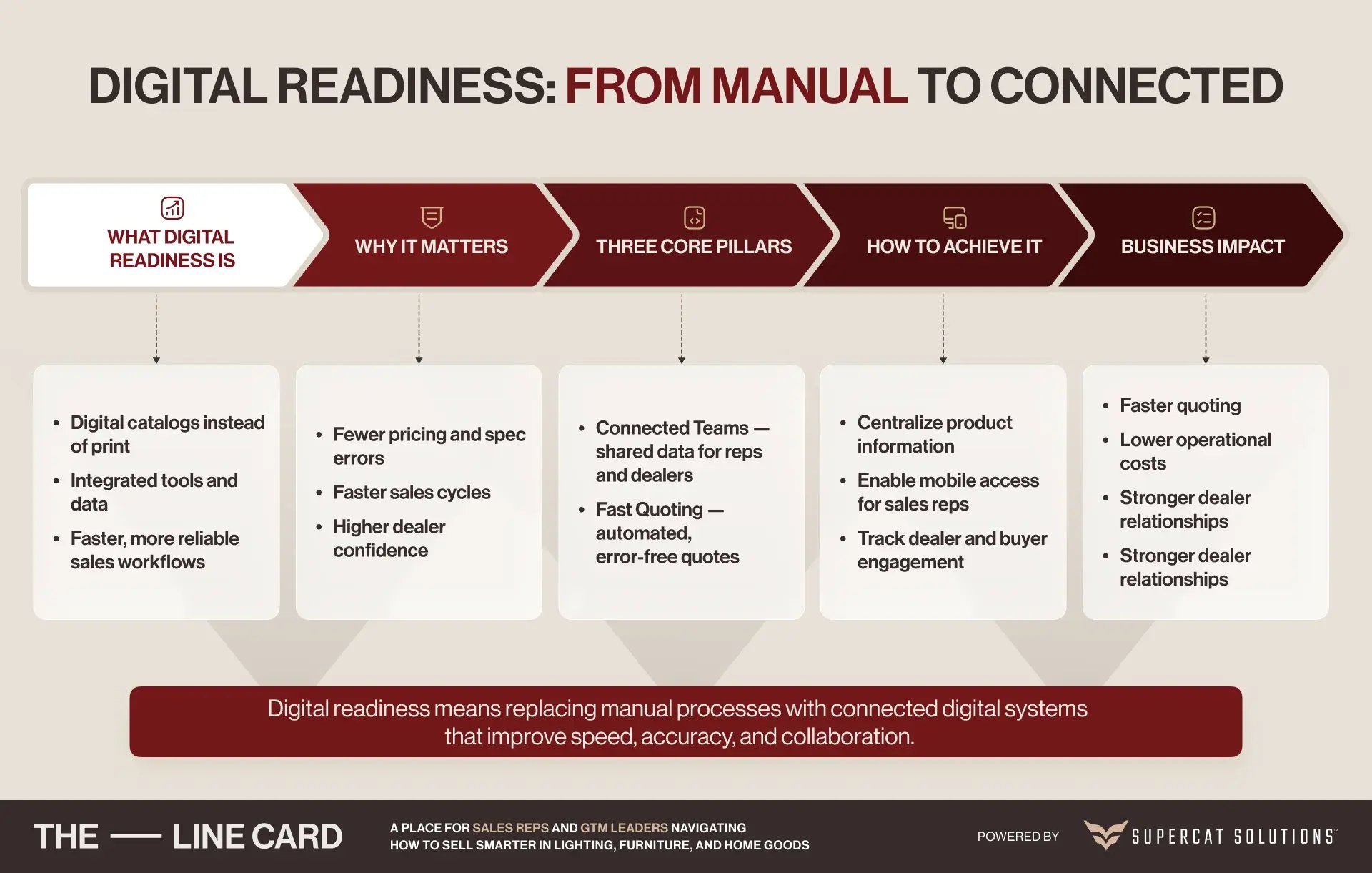
In simple terms, digital readiness is your brand’s ability to function smoothly and competitively in a connected, data-driven world. It shows how ready your organization is to replace manual processes with digital ones, ensuring that every part of your operation runs more efficiently and accurately.
Digital readiness combines three main elements:
- Catalog Accuracy: How consistent, detailed, and up-to-date your product data is across all channels.
- Quoting Speed: How quickly your reps and dealers can configure, price, and share accurate quotes.
- Rep Connectivity: How easily your sales teams access and share the same information, online and offline.
Why Digital Readiness Matters
The furniture industry is defined by complexity: thousands of SKUs, dozens of finish options, and a mix of custom and stocked items. Without a digital foundation, this complexity turns into chaos (inconsistent catalogs, outdated pricing, and sales delays).
Digitally ready brands, on the other hand, turn complexity into control. Their reps quote faster. Their dealers trust their data. Their marketing, product, and sales teams stay aligned through a single source of truth.
In other words, being digitally prepared enhances sales confidence, fostering dealer loyalty and encouraging repeat orders.
3 Core Pillars of Digital Readiness
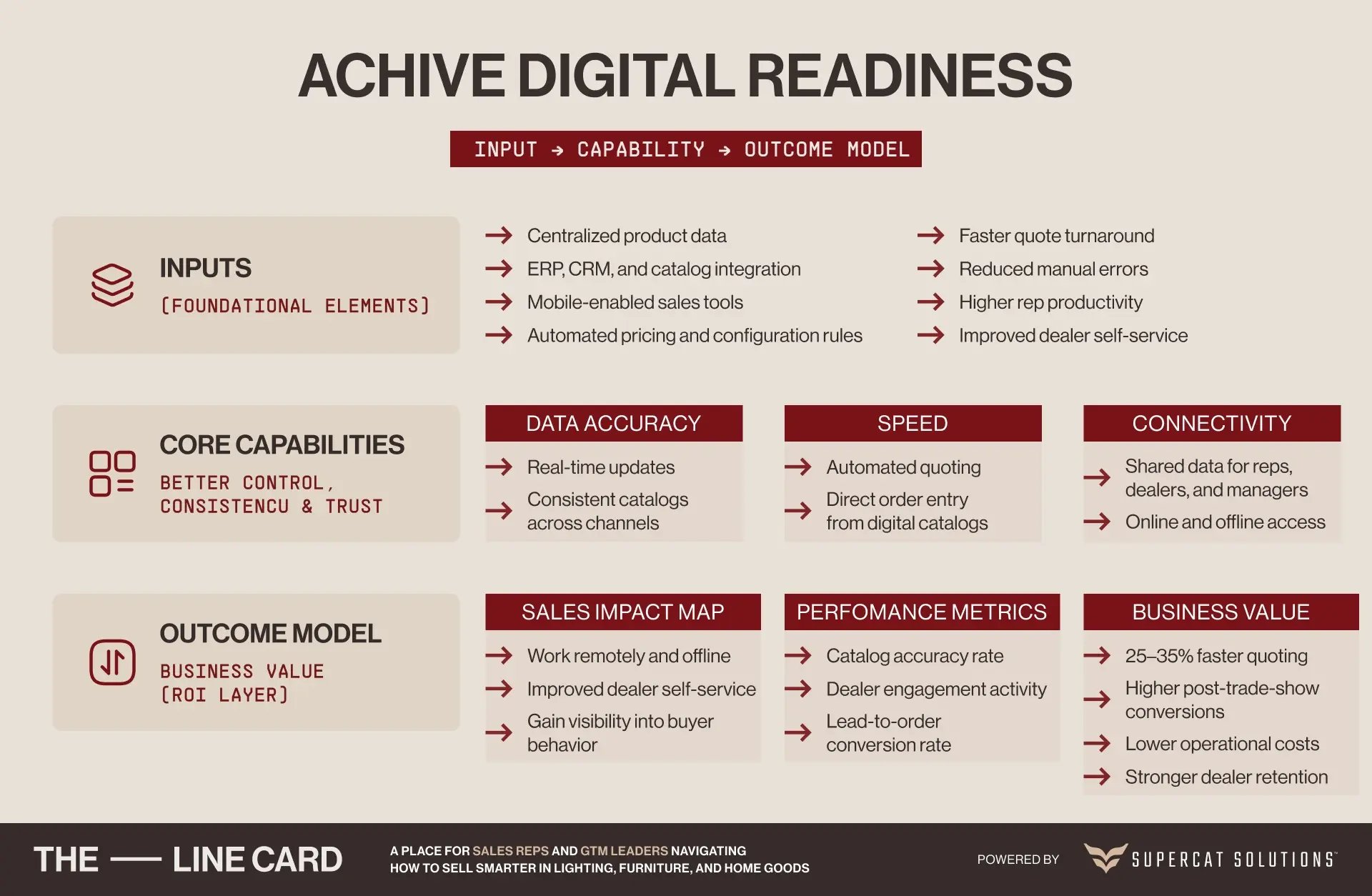
1. Accurate Product Information
Catalog accuracy is the backbone of readiness. When every finish, measurement, and configuration is correct across platforms, your sales team can quote confidently and avoid costly errors.
A well-structured Product Information Management (PIM) system ensures:
- Real-time catalog updates
- Consistent pricing and availability
- Easy data sync across ERP, CRM, and sales tools
For large, configurable catalogs, it prevents “data drift” that can erode trust among reps, dealers, and customers.
2. Faster Quoting and Order Entry
Speed determines readiness. A rep's ability to create and send accurate quotes within hours decides whether an opportunity becomes revenue.
To speed up work, furniture manufacturers use digital sales tools that automate complex quoting, combine visual configurations, and connect directly to inventory data. That means:
- Real-time price updates
- Fewer manual errors
- Orders placed directly from digital catalogs
This streamlined quoting process transforms the buying experience for both reps and dealers, especially in the premium furniture and lighting sectors, where custom orders and finish combinations are standard.
3. Connected Sales Teams and Dealers
When your field reps, showrooms, and distributors all share the same data ecosystem, your brand becomes easy to buy from.
Imagine a rep showing a new lighting collection on a tablet during a client visit, while the same collection instantly appears in the dealer’s online portal with updated specs and visuals. Meanwhile, the sales manager can see which buyers are exploring the catalog and follow up with those who have viewed but haven’t ordered yet.
Platforms like SuperCat make this level of alignment possible. When every interaction runs on the same reliable information, buying from your brand becomes effortless. And that’s what turns one-time orders into lasting partnerships.
Connected teams create cohesive experiences, driving follow-ups, repeat sales, and stronger brand relationships.
How to Achieve Digital Readiness
Centralize product data
Say goodbye to scattered spreadsheets. Every SKU, specification, and product image lives in a single, organized hub. This unified database automatically syncs across your ERP, CRM, and digital catalog tools, ensuring everyone works with the same accurate, up-to-date information.
Empower reps with mobile access
Whether they’re meeting buyers at High Point Market, visiting a designer’s studio, or following up after a trade show, sales reps need the freedom to work anywhere. With mobile access, they can browse collections, showcase finishes, configure custom pieces, and generate quotes instantly.
This flexibility eliminates the delays of waiting for system updates or Wi-Fi connections. Reps can respond to buyer questions in real time, share digital lookbooks instead of binders, and capture orders on the spot.
Measure engagement
Tracking how dealers interact with your products turns everyday sales activity into valuable intelligence. When you can see which buyers open quotes, revisit collections, or reorder through your online portal, you gain a clear picture of what’s working and where follow-up is needed.
Sales reps can instantly see which products, finishes, or price ranges are generating the most attention and use that insight to tailor their approach.
5 Questions to Measure Your Brand’s Digital Readiness
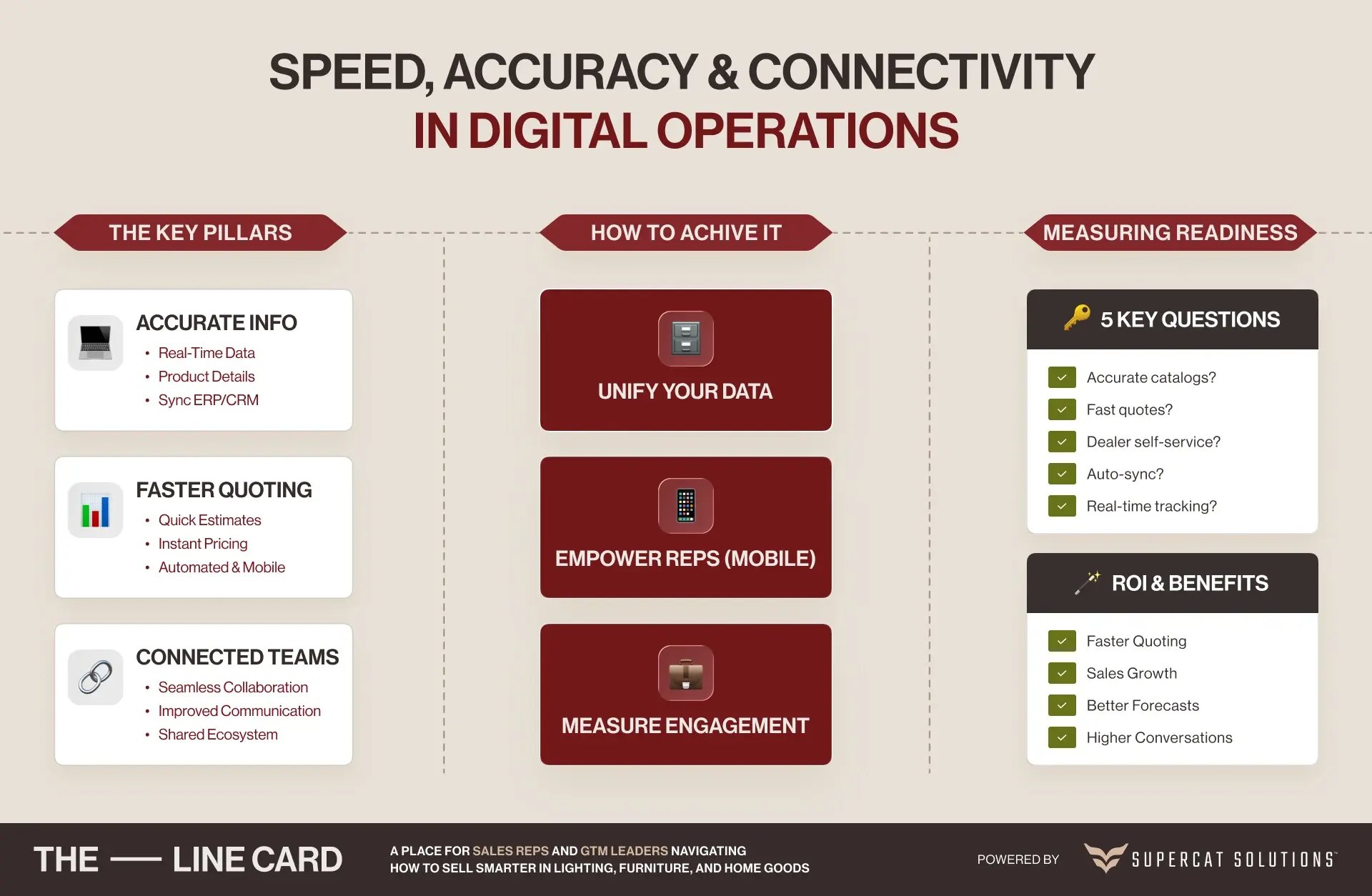
- Are your catalogs accurate across every sales channel? Accuracy builds trust, and trust drives sales.
- Can your reps quote custom pieces within 24 hours? Speed is a key indicator of readiness. If quoting still requires manual approvals or spreadsheet lookups, you’re losing opportunities to faster competitors.
- Do your dealers have access to self-service tools with real-time pricing? Empowering buyers to explore collections and place orders anytime strengthens relationships and reduces your team’s workload.
- Is your product data automatically synced between ERP, CRM, and catalog tools? Automation eliminates version conflicts.
- Can you track engagement across quotes, catalogs, and orders in real time? Visibility into buyer behavior helps reps follow up smarter and managers make data-driven decisions.
If most of your answers lean toward “no,” your operations likely depend on manual workflows, and that translates to lost time, lost trust, and lost revenue.
The ROI of Digital Readiness
When furniture brands achieve true digital alignment, the benefits appear at every level of the business.
- 25–35% faster quoting, thanks to automated configuration and synchronized data.
- Higher lead conversion rates post-trade show, as reps follow up faster and dealers revisit online catalogs to finalize orders.
- Improved rep satisfaction and retention, because mobile access and accurate data remove friction from daily workflows.
- Better data visibility for leadership, enabling smarter forecasting and product decisions.
- Reduced operational costs, since fewer manual errors mean less time spent correcting orders or updating outdated specs.
- Stronger dealer relationships, built on trust in consistent pricing and reliable delivery information.