
Read Time 8 mins

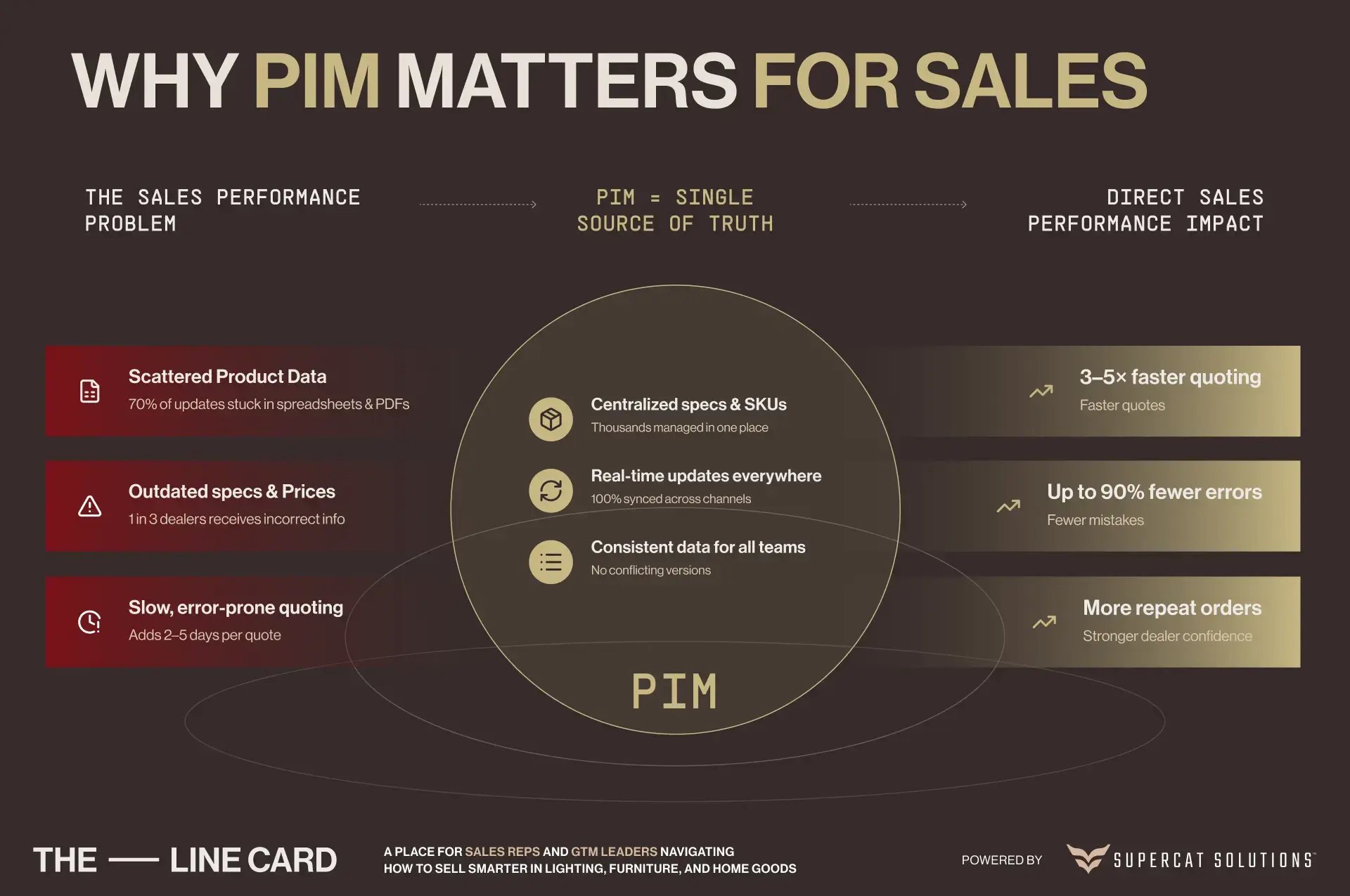
Beautiful design might catch the eye, but in the furniture and lighting industry, it’s not what closes the deal. Behind every stunning showroom and glossy catalog lies a hidden battlefield of data: SKUs, finishes, dimensions, prices, and images scattered across spreadsheets and outdated systems. When that information falls out of sync, chaos follows slow quotes, frustrated dealers, and costly mistakes.
That’s where Product Information Management (PIM) steps in to change the game. By unifying all product data into a single source of truth, PIM empowers your team to move faster, sell smarter, and deliver a seamless buying experience every time.
What Is Product Information Management (PIM)?
Product Information Management (PIM) is a system that helps brands collect, manage, and distribute all their product data from technical specifications to marketing descriptions across multiple channels.
For furniture and lighting manufacturers, this means:
- Managing thousands of SKUs with variations in size, material, or finish
- Keeping product updates synchronized across dealers, showrooms, and digital catalogs
- Ensuring consistency across ERP, CRM, and eCommerce platforms
Without a unified PIM solution, brands face delays, inconsistencies, and missed sales opportunities.
The Sales Performance Challenge in Furniture & Lighting
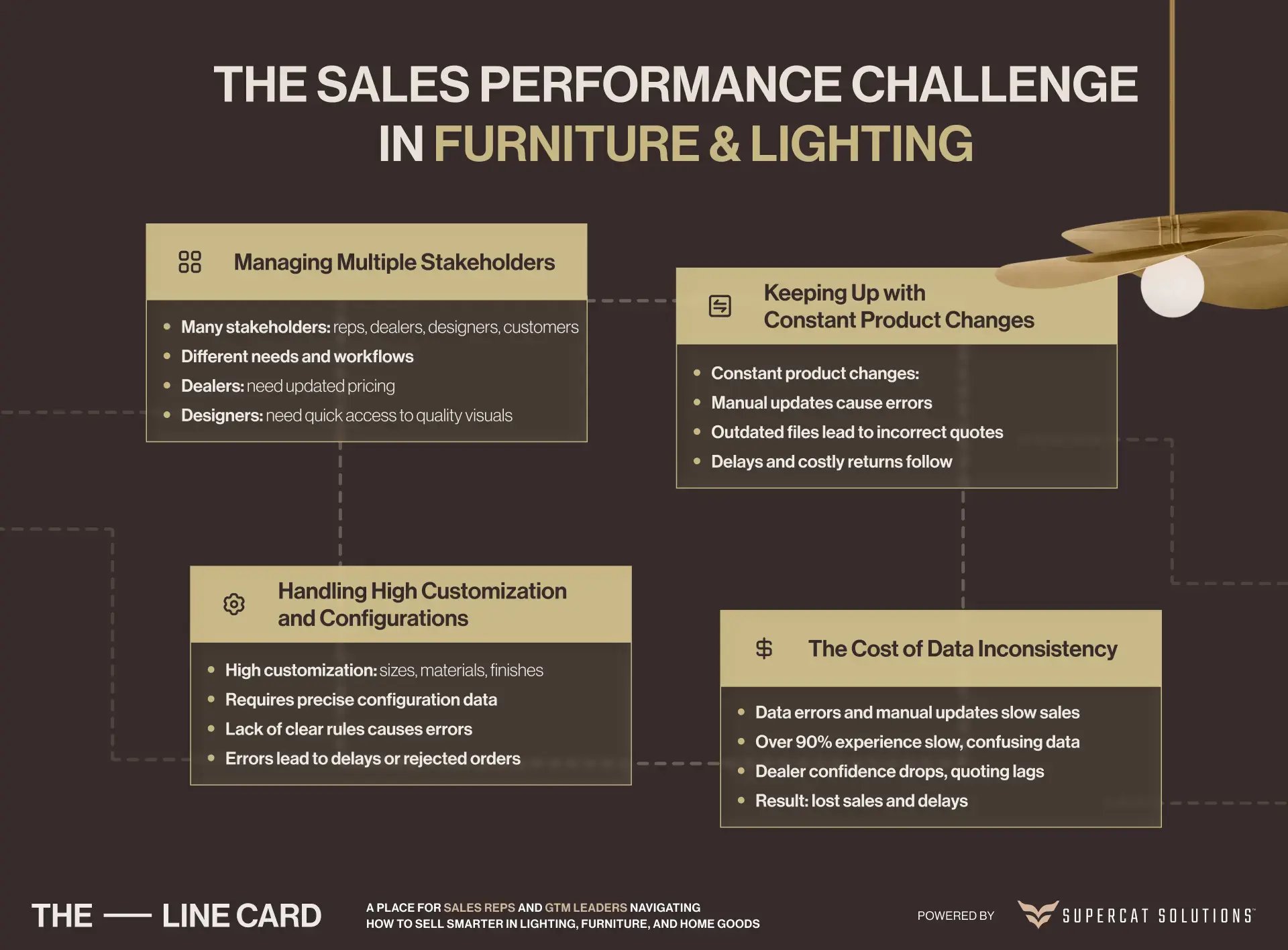
The sales process in the furniture and lighting industry is uniquely complex. Each deal involves multiple players, constant product updates, and highly customized configurations. These factors make it challenging to maintain consistency, speed, and accuracy across all sales touchpoints.
Managing Multiple Stakeholders
Manufacturers collaborate with independent sales reps, dealer networks, designers, and end customers, each with distinct needs and workflows. For example, dealers require updated pricing and display information, while designers expect quick access to digital catalogs with high-quality visuals.
Keeping Up with Constant Product Changes
In this industry, product lines evolve continuously, new finishes are introduced, SKUs are discontinued, and specifications get updated every season. When updates are handled manually across spreadsheets, PDFs, and shared folders, errors are inevitable. A single outdated catalog file can lead to incorrect quotes, shipment delays, and costly returns.
Handling High Customization and Configurations
Unlike off-the-shelf retail products, furniture and lighting often require custom dimensions, materials, or finishes. This high degree of customization demands precise configuration data. If reps or dealers lack access to accurate product rules and options, even a minor error can delay manufacturing or result in rejected orders.
The Cost of Data Inconsistency
Based on SuperCat’s analysis of 14 won-deal customer calls, data inconsistency and manual catalog management were among the top friction points impacting sales efficiency. In over 90% of those deals, manufacturers reported that slow catalog updates and confusing product data directly eroded dealer confidence and slowed down quoting cycles. In practice, this means lost sales, longer approval timelines, and a weaker customer experience.
How Product Information Management Improves Sales Performance
1. Ensures Data Accuracy Across Every Channel
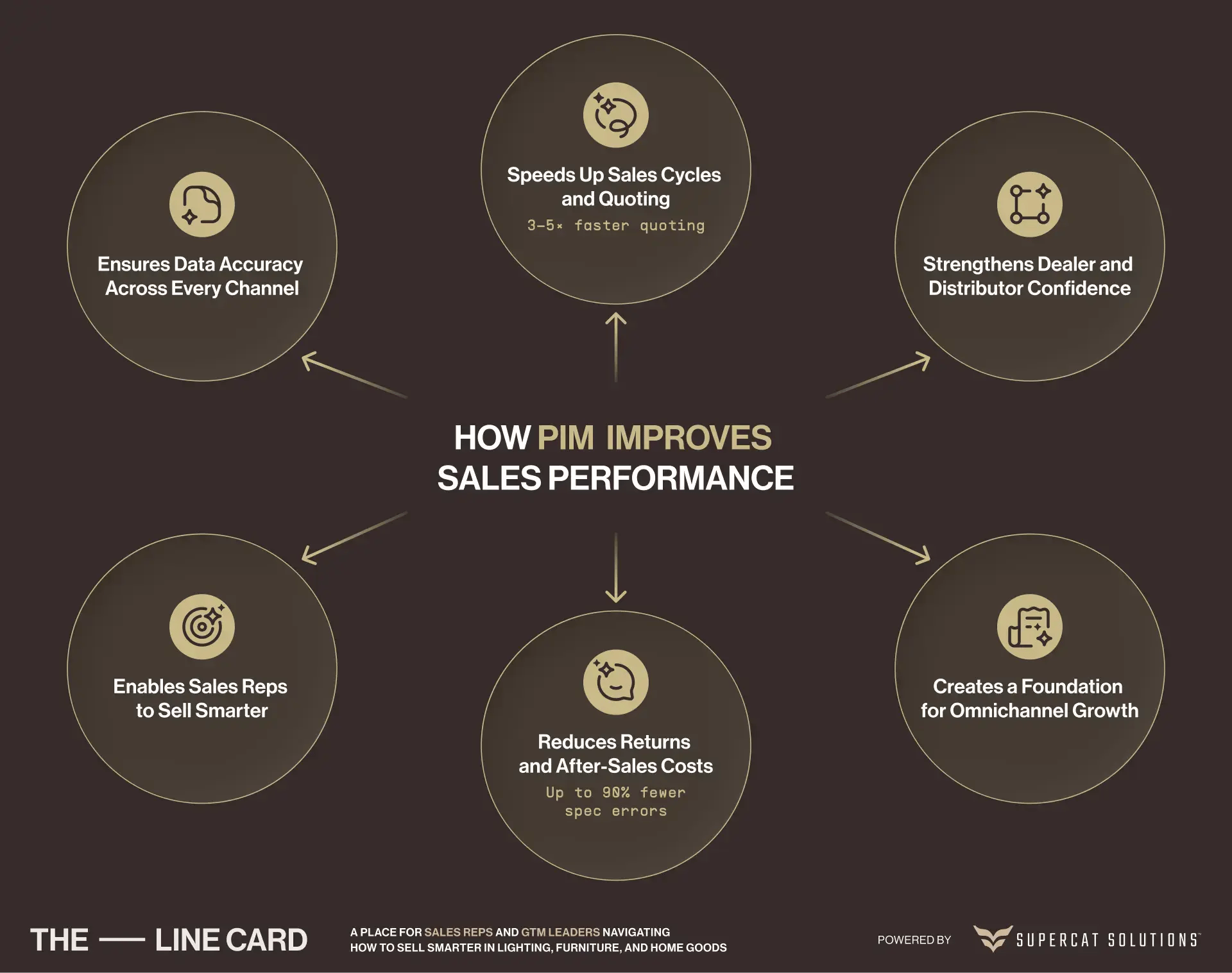
A Product Information Management (PIM) system acts as the single, authoritative source for all your product data. With a centralized database, every sales reps, dealer, and distributor accesses the same up-to-date information, eliminating confusion and reducing errors such as quoting discontinued products or sharing incorrect dimensions. The outcome is improved consistency across all channels, enhanced brand trust, and significantly fewer costly order corrections throughout your dealer network.
2. Speeds Up Sales Cycles and Quoting
Centralized product data means sales teams no longer waste time chasing updates or waiting for marketing and admin approvals. With a PIM in place, reps can instantly access accurate specs, pricing, and availability, enabling them to configure and quote on the spot. Imagine a lighting rep updating collection pricing mid-meeting and sending a polished quote within minutes, rather than days. That kind of agility turns slow, manual workflows into real-time selling power, driving faster quotes, higher close rates, and a measurable lift in overall sales performance.
3. Reduces Returns and After-Sales Costs
When product details are inconsistent, small errors can escalate into significant problems (such as the wrong finish, the wrong size, or a mismatched configuration). A PIM system eliminates these costly mistakes by ensuring that every dealer, designer, and buyer sees the same accurate product data at every stage of the sale, from initial browsing to final invoicing. This consistency reduces returns, minimizes waste, and strengthens trust across your dealer network, ultimately protecting both your margins and your reputation.
4. Enables Sales Reps to Sell Smarter
In a hybrid selling world, speed and accuracy are everything. When a Product Information Management system connects with digital sales platforms, reps gain instant, mobile access to live product specs, stock levels, and marketing materials, all synced from a single, reliable source. No more guessing, outdated PDFs, or waiting for updates from the office.
According to SuperCat’s Evidence-Based Pain Prioritization study, sales reps equipped with accurate, centralized data were 2.3x more active in their sales tools compared to those struggling with fragmented information. The outcome is improved insights, quicker decision-making, and a notable increase in productivity in the field.
5. Strengthens Dealer and Distributor Confidence
Dealers naturally prioritize brands that make selling effortless, and a Product Information Management system does exactly that. With every catalog update, image refresh, or product change, information is automatically synced across dealer portals, allowing partners to access the latest updates instantly and serve customers with confidence.
This level of reliability streamlines their daily operations, minimizes back-and-forth communication, and fosters lasting trust. Over time, that trust translates into stronger brand loyalty, more consistent promotion, and increased repeat business across your entire dealer network.
6. Creates a Foundation for Omnichannel Growth
A well-structured Product Information Management system serves as the backbone of modern sales infrastructure. It powers every channel where your products appear, from websites and digital catalogs to eCommerce platforms and dealer portals. By unifying product data across all these touchpoints, manufacturers can confidently expand into new digital channels without sacrificing data accuracy or control. The result is a seamless, consistent customer experience whether the buyer engages online, in a showroom, or directly with a sales rep.
Conclusion
By eliminating data chaos, empowering reps and dealers, and creating a single source of truth, PIM directly translates into faster sales cycles, fewer errors, and stronger customer relationships.
Ready to move from spreadsheets to a single source of truth?
Explore how centralized product data can power your digital catalog and sales portal.